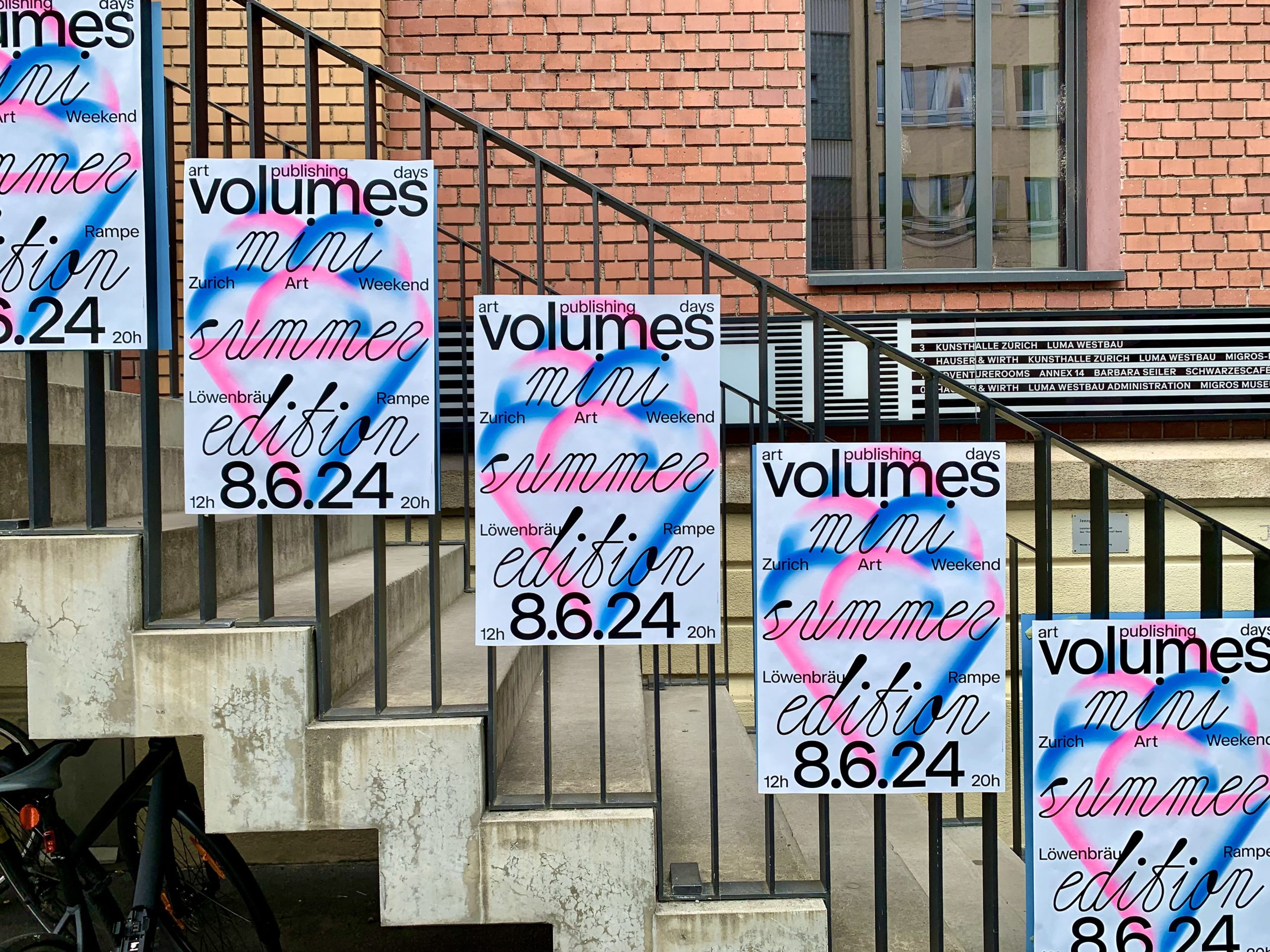
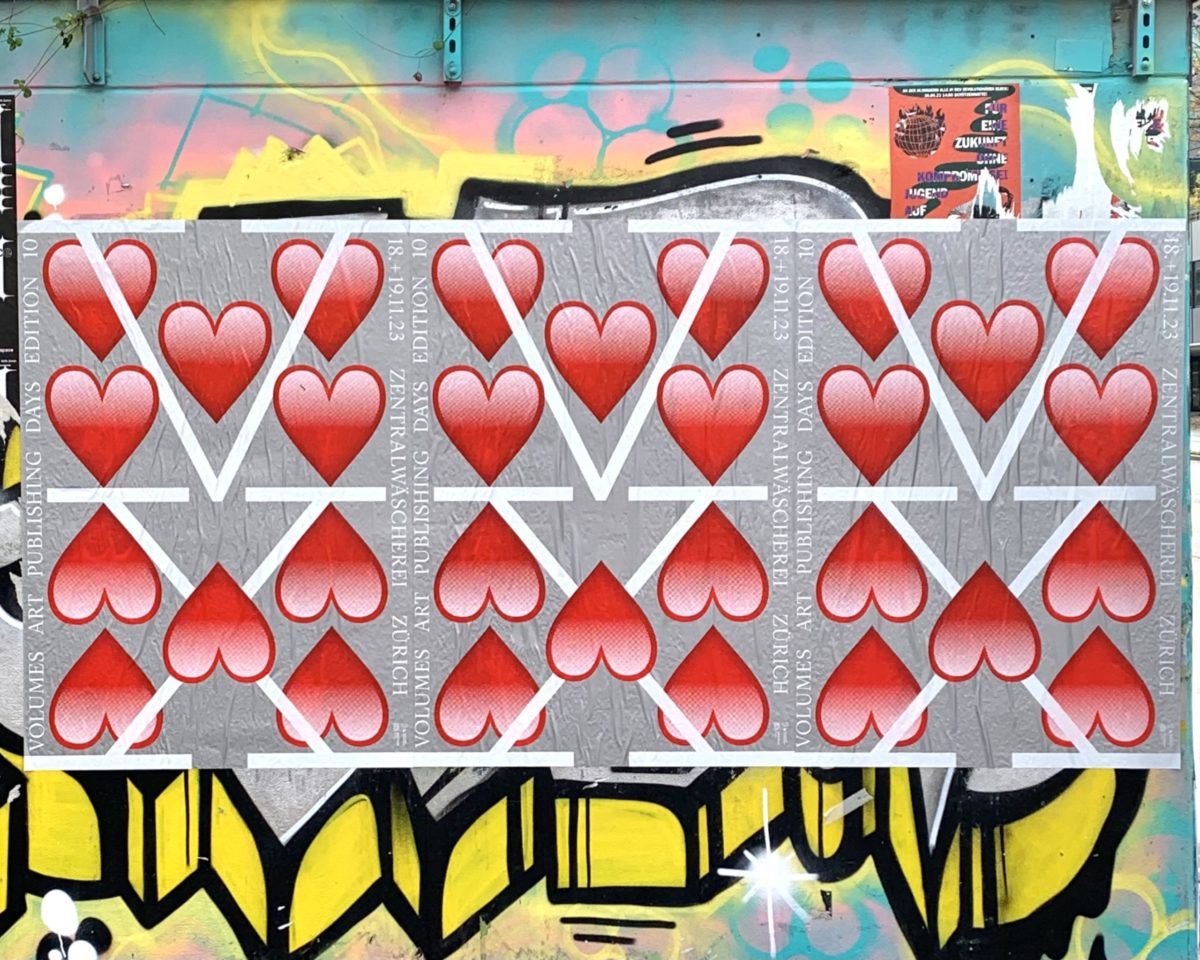
A sale of artists’ books, fanzines, and posters from the CEC…
Exhibition: 22.05 – 26.06.2026
Opening, 21.05.2026, 6 PM – 8 PM (Nuit des Bains)
Finissage, 25.06.2026
From 6:00 PM Final restock and last-minute discounts at the clearance sale. Everything must go!
7.30 pm Reading and conversation with Rosanna Puyol Boralevi, Paris-based poet, translator and editor.
The Paris-based poet, translator and editor will read excerpts from her poetry book D’l’or, as well as a selection of her more recent writings.
The readings will be followed by a conversation.
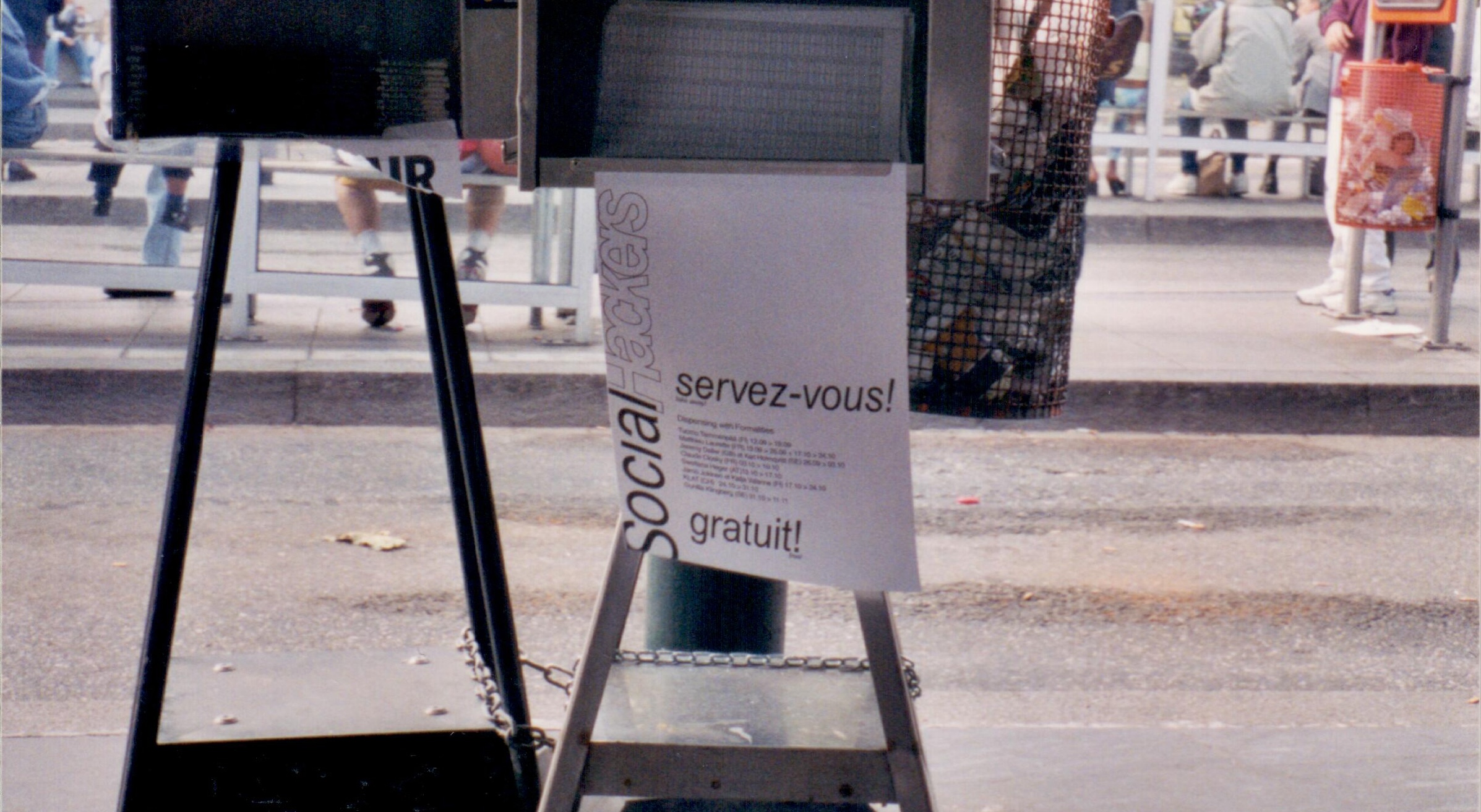
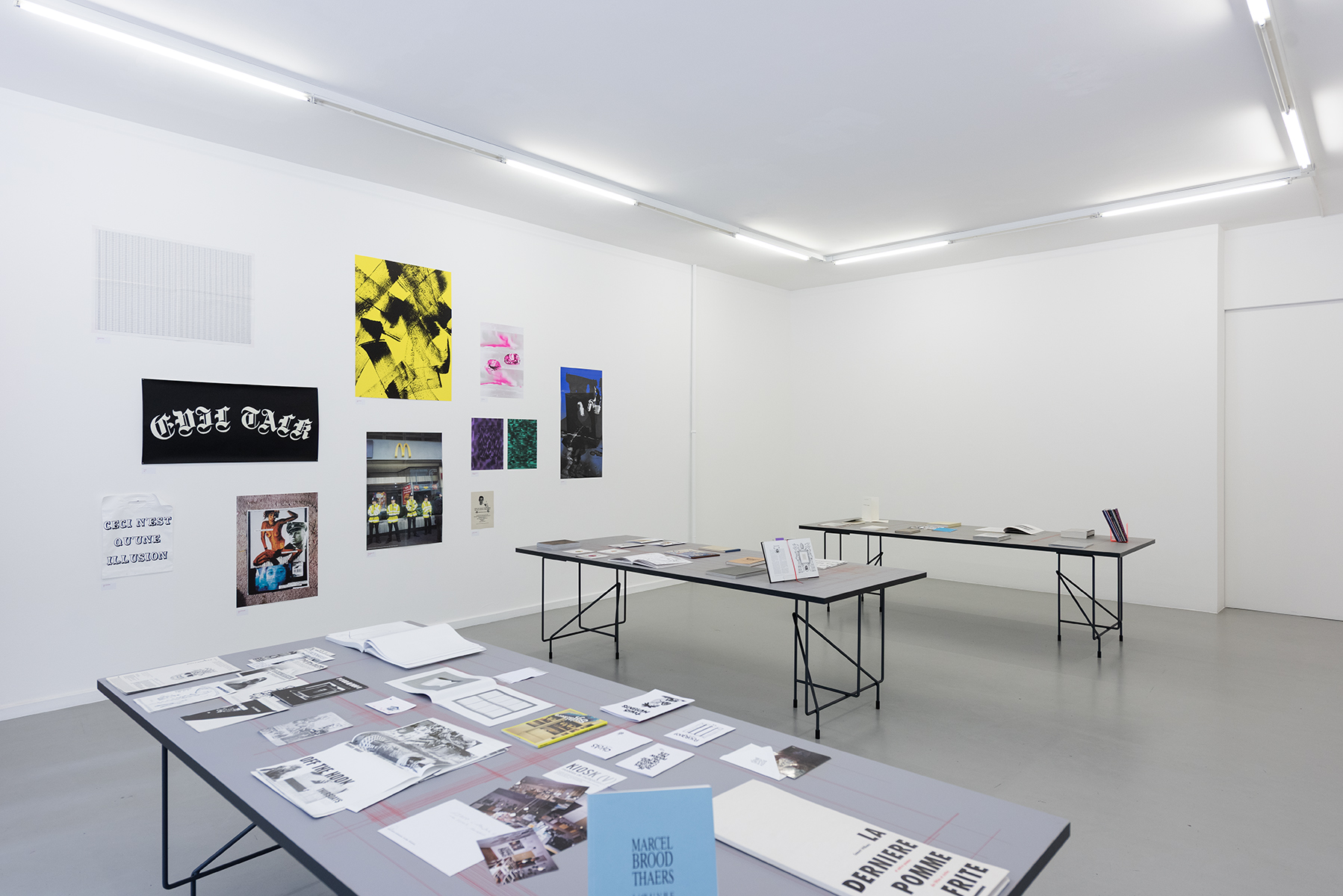
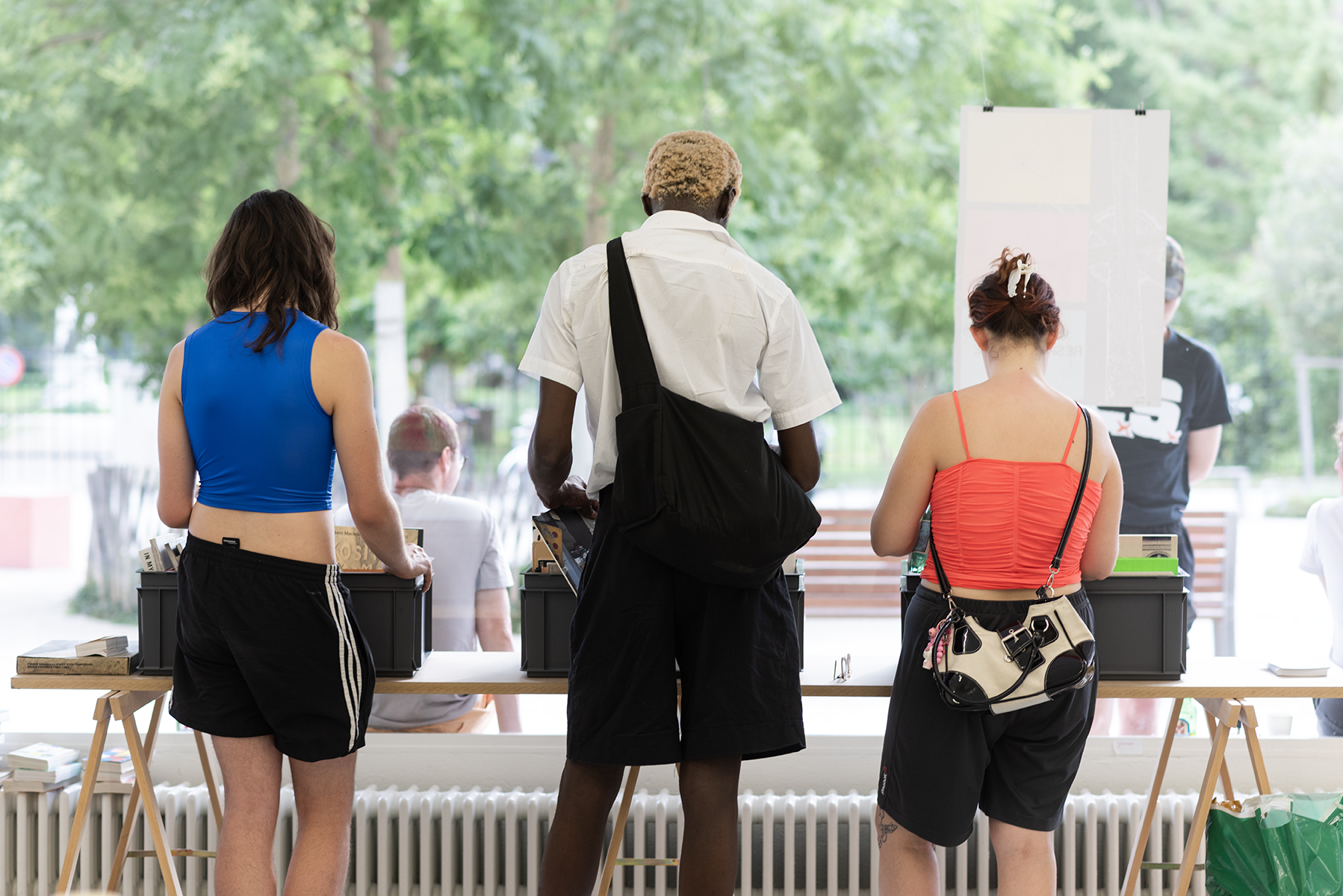
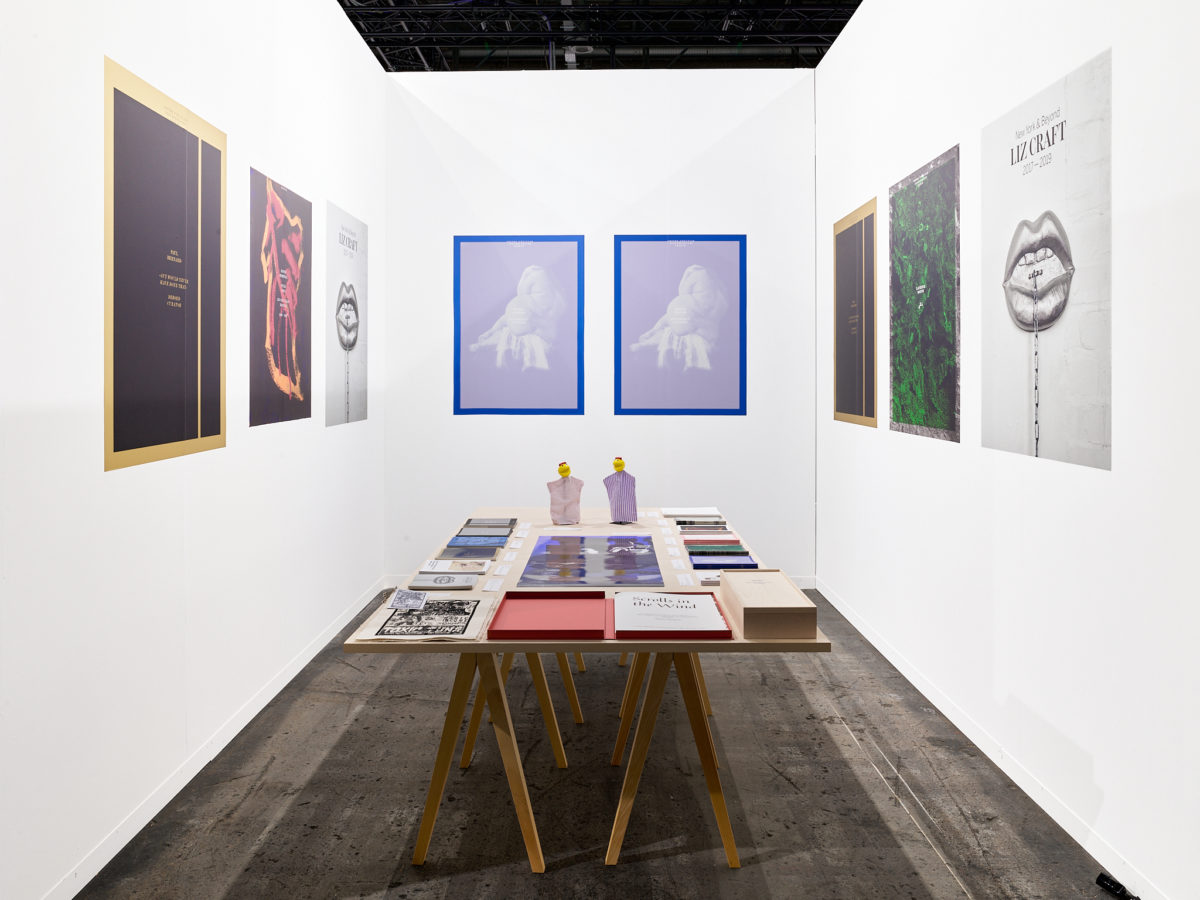
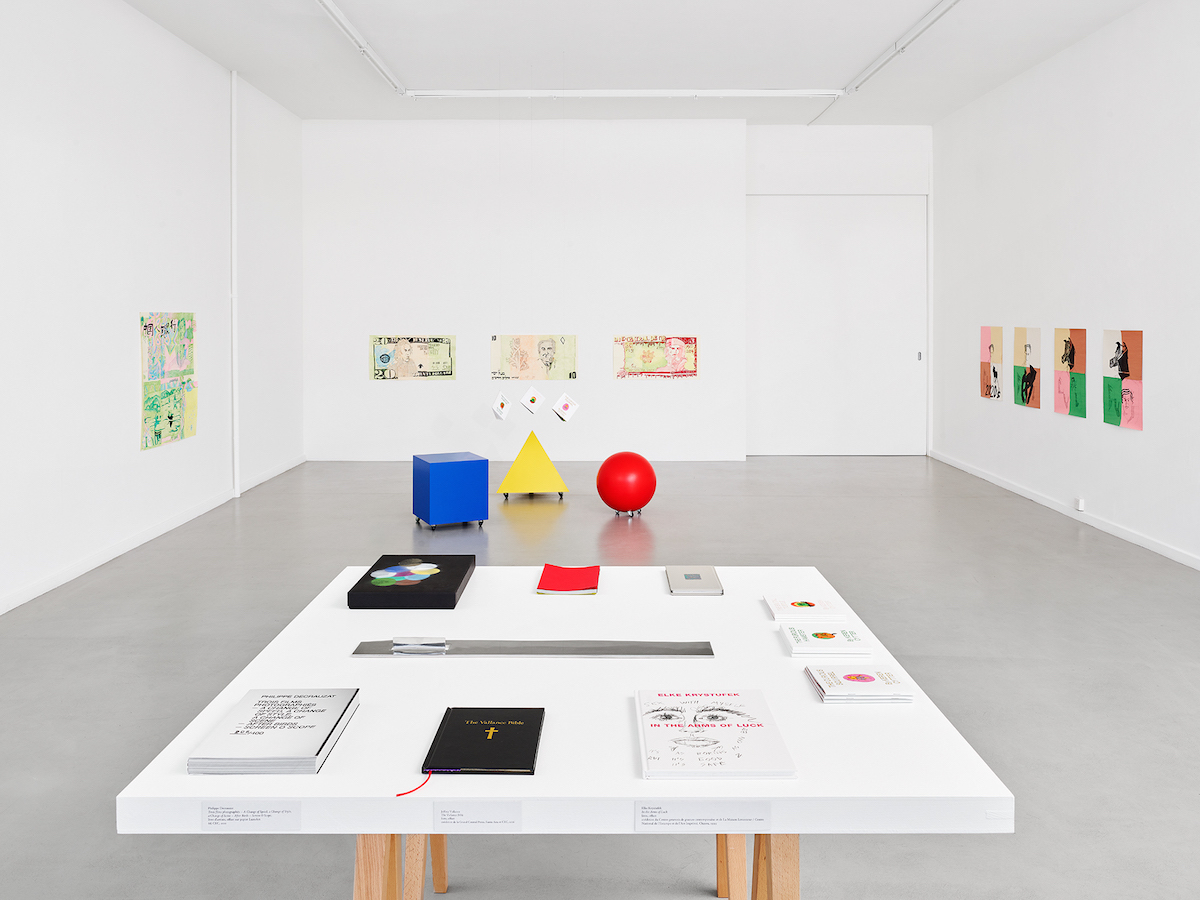
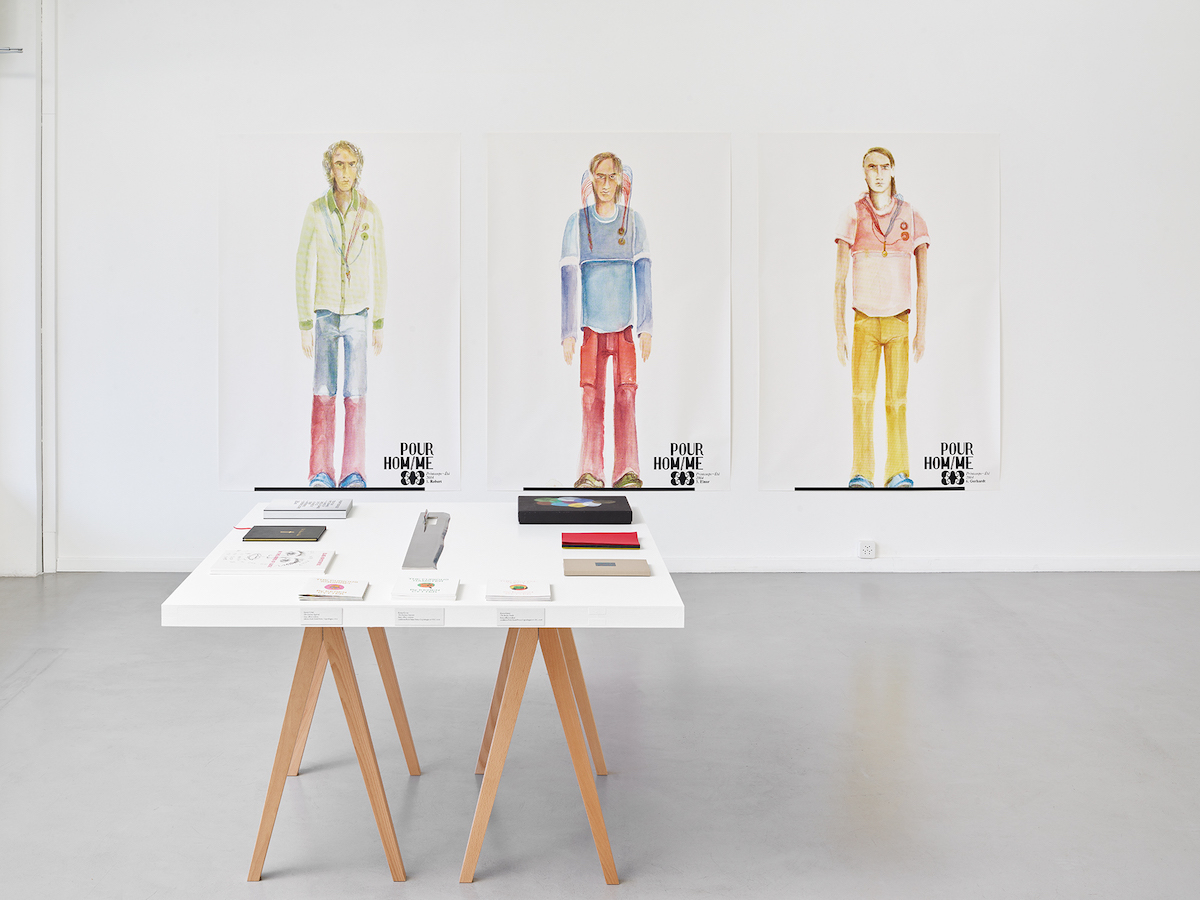
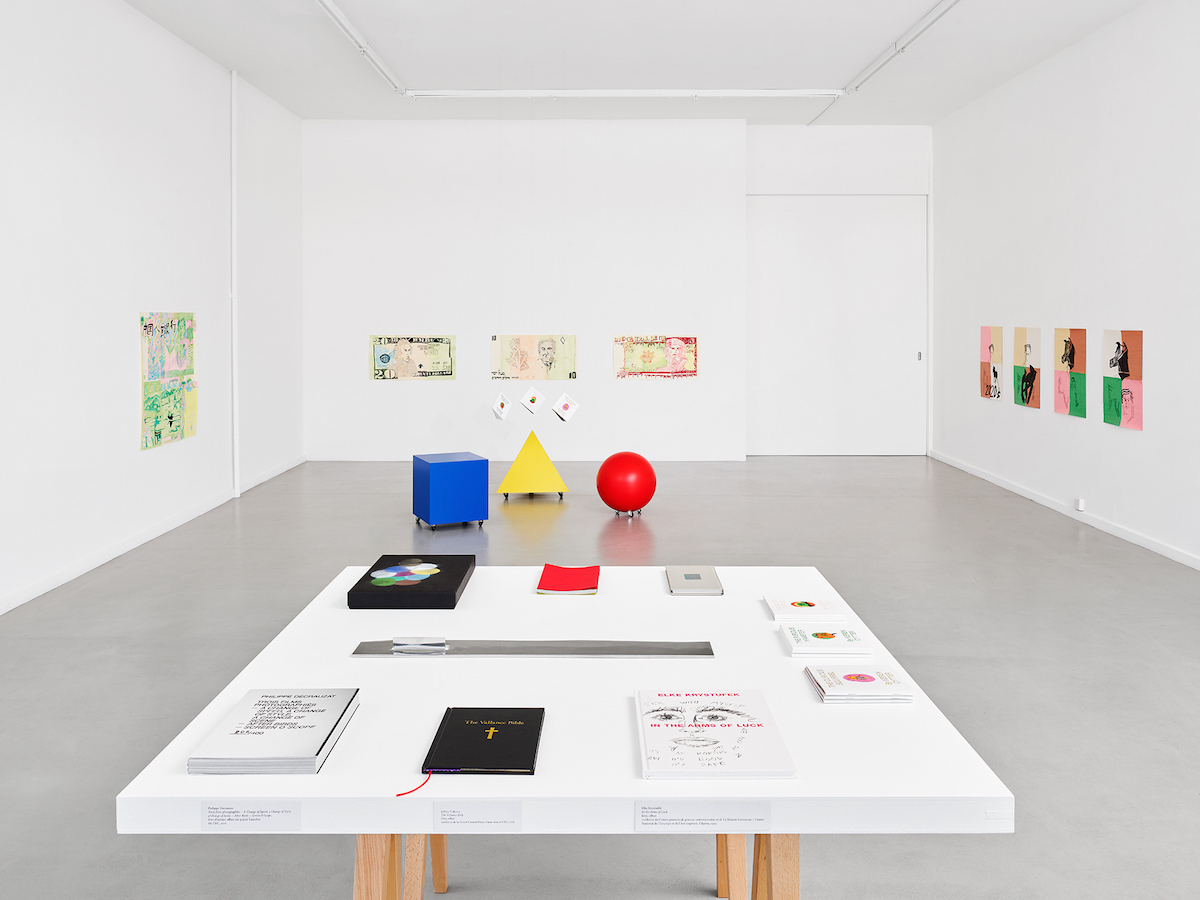
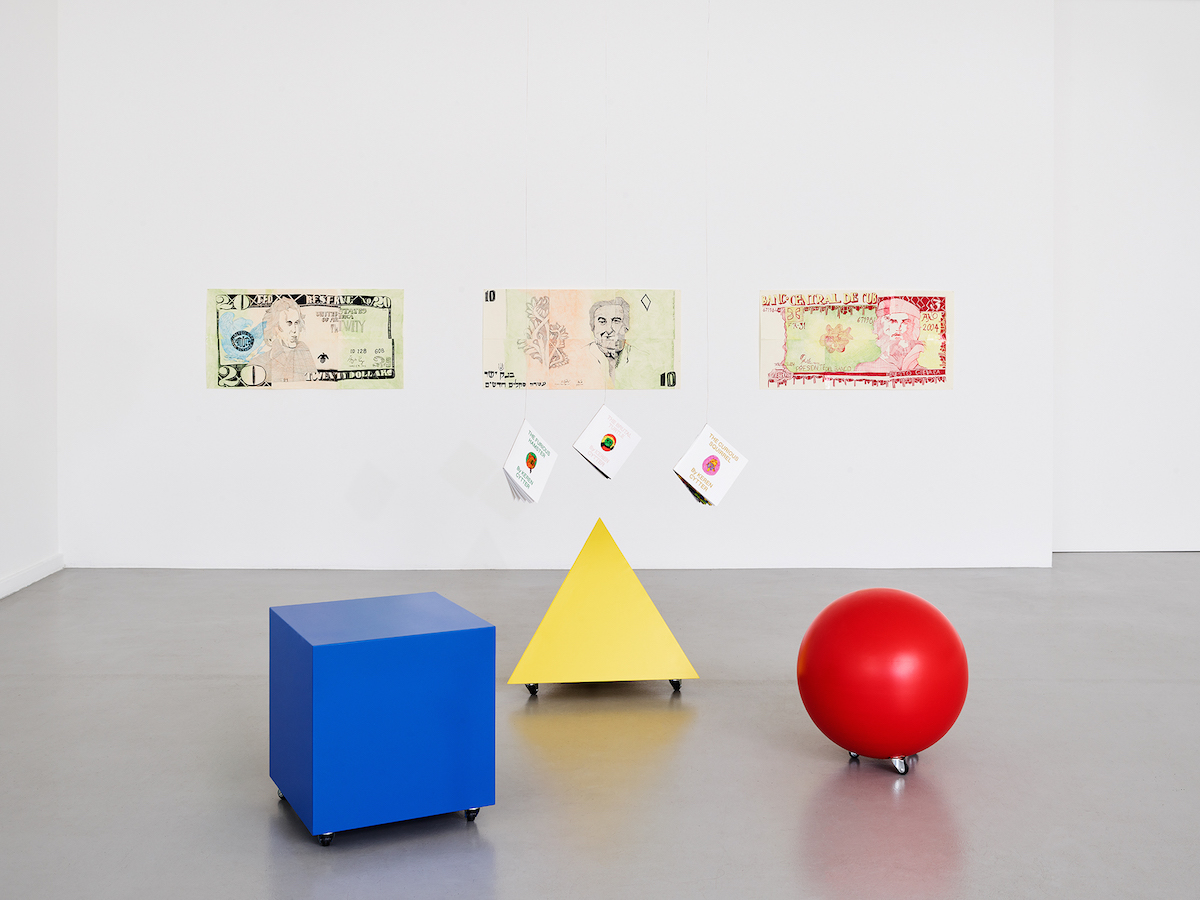
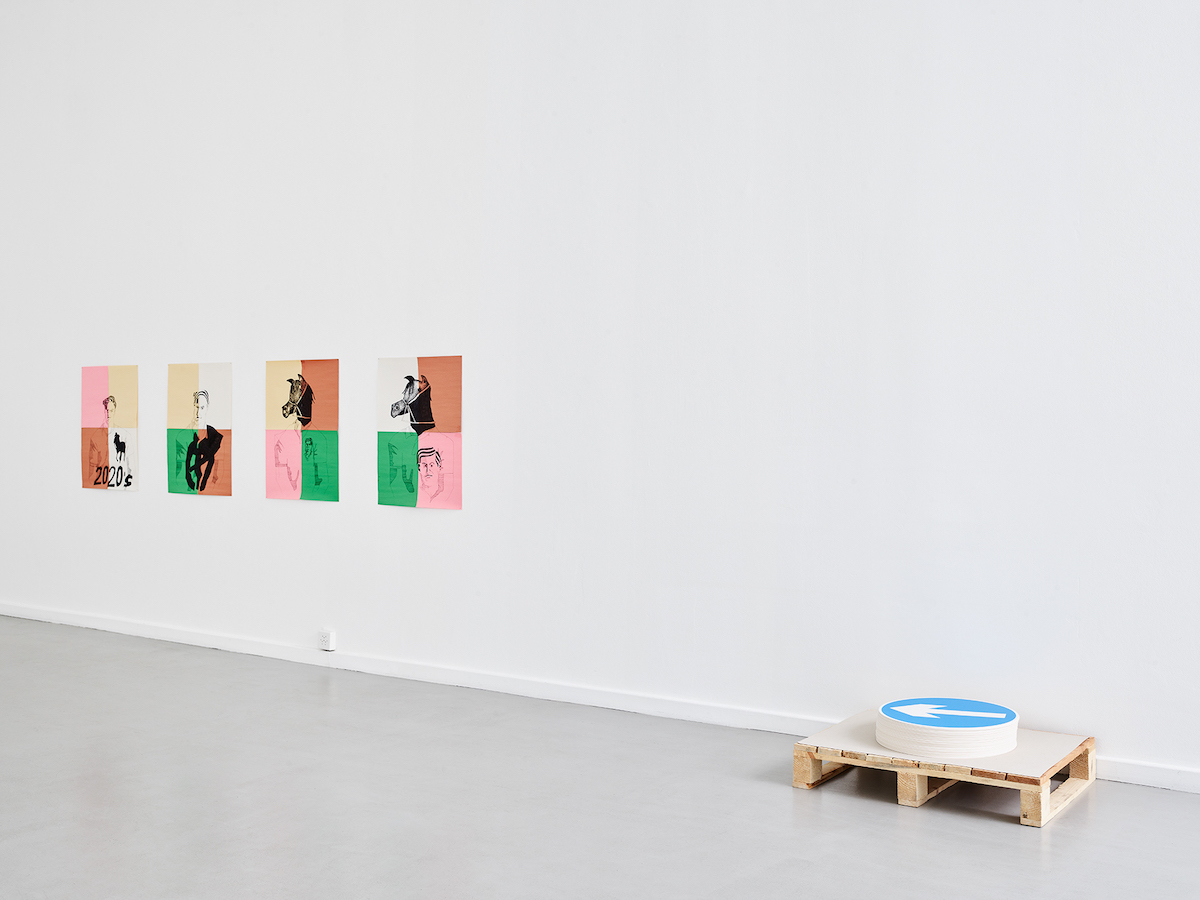
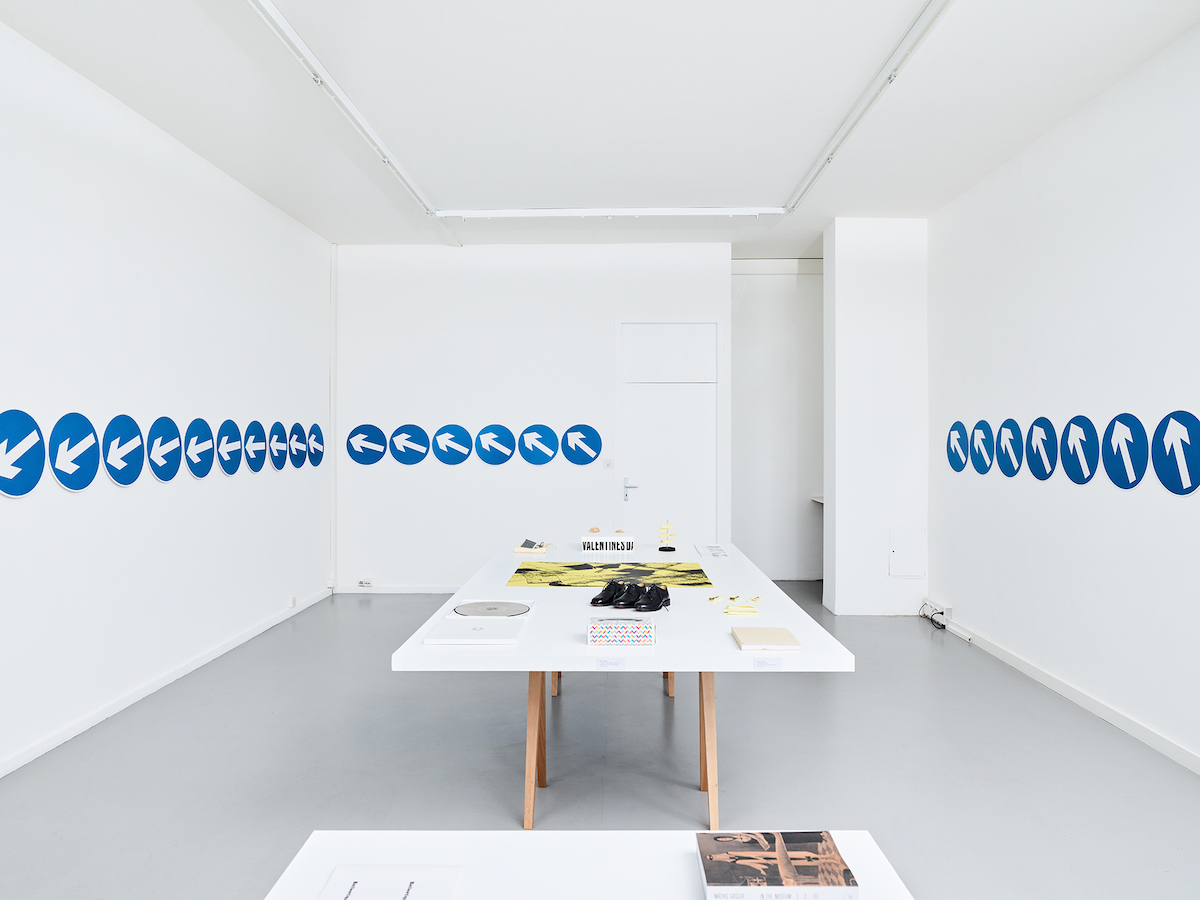
The Centre d’édition contemporaine is clearing out its publication inventory ! Too many books in the street presents artist books, fanzines, and posters produced by the venue at reduced prices. The publications will be displayed alongside a wide selection of books from its library.
Exhibition view, Too many books in the street, CEC, 2026. Photo : Remy Ugarte VallejosExhibition view, Too many books in the street, CEC, 2026. Photo : Remy Ugarte Vallejos
The Centre d’édition contemporaine is hosting a group exhibition by the HEAD (Geneva University of Art and Design)’s Chroma (Représentation) option, which explores the origins of their artistic practice.
Finissage : 07.05.2026, 18h-20h Listening session with Henry Rausch
With
Maria Ayuda, Eole Camus, Baptiste Chenuz, Sanoë Chacín, Constance Flahaut, Fleur Gavarin, Maude Lueber, Ewan Mesa, Razene El Mestaysser, Charlotte Moreau, Lilly Nassauer, Aylin Özer, Audrey Ramos, Luna Rauck, Henry Rausch & Steven Kaiser, Philippe Stet, Pola Gilbert De Vautibault, Leandra Volpe, Jo Wydler
Audrey Ramos, Gorrioncito, 2026. Photo : Heo RinEwan Mesa, Surely Not, 2026. Photo : Heo RinBaptiste Chenuz, Jingo PEZ, 2026. Photo : Heo RinHenry Rausch, Mental Stack, 2026. Photo : Heo RinAylin Özer, Endless Loading, 2026. Photo : Heo RinFleur Gavarin et Pola Gilbert De Vautibault, Chrysalide, 2026. Photo : Heo RinLilly Nassauer, Le Rossignol ivre de fleur, 2026. Photo : Heo RinEole Camus, Mind that stains, 2026. Photo : Heo RinPhilippe Stet, Wasp Trap, 2026. Photo : Heo RinRazene El Mestaysser, 2 x 48, 2026. Photo : Heo RinVue de l’exposition FURIOUS THINKING, CEC, 2026. Photo : Heo RinConstance Flahaut, Take the sadness outta Saturday night, 2026 ; Leandra Volpe, Missing Piece, CEC, 2026. Photo : Heo RinConstance Flahaut, Take the sadness outta Saturday night, 2026 ; Leandra Volpe, Missing Piece, CEC, 2026. Photo : Heo RinMaude Lueber, Dice try, 2026. Photo : Heo RinJo Wydler, Ups almost kissed in the cowshed…, 2026. Photo : Heo RinEwan Mesa, Almost Surely, 2026. Photo : Heo RinMaria Ayuda, Family’s Closet, 2026. Photo : Heo RinRazene El Mestaysser, 2 x 48, 2026. Photo : Heo RinSanoë Chacín, Nique un raciste, vive mes racines, 2026. Photo : Heo RinSanoë Chacín, Nique un raciste, vive mes racines, 2026. Photo : Heo RinCharlotte Moreau, Reste, CEC. Photo : Heo RinLeandra Volpe, Missing Piece, 2026. Photo : Heo Rin
We started with what we see in the rear-view mirror: streams of images that have been consumed, digested – with varying degrees of intolerance – and regurgitated. How is it decided in this uninterrupted flow what is forgotten, what is retained and what is transformed to reappear in artistic practice?
The images we retain constitute a form of positioning long before they are put to use. They accumulate in an intimate, in-between space – a mental reservoir. This is a melting pot of memories, personal archives and collections of flashbacks or fleeting images drawn from the endless feed. It is in this space that forms, obsessions and intuitions take shape.
Furious Thinkings, organised by Nicolas Brulhart, Cédric Fauq and Niels Trannois in collaboration with students from the Chroma track at HEAD, focuses on this raw material, searching for swirling images. The exhibition sets traps to help capture what seems too fleeting, blurry and uncertain.
Images and other symbols are building blocks for future vocabularies. Reappropriating them involves specific actions such as selecting, framing, cropping, colouring, combining, enlarging, printing and editing. Extracting an image from its context is a transformative act in itself, giving it duration, weight and a place. In the face of their rapid circulation, these actions introduce a different temporality: that of sorting, paying attention, and recomposition. These are actions that attempt to moderate the excessive speed of furious thinking.
For students on the Chroma track, who primarily work with canvas, the challenge was to create art in a different way by reimagining everyday objects, such as accessories, toys, tiles, altars and cakes. Anything could serve as both the surface and the subject matter, including wall sconces, bedding, slippers and Rubik’s Cubes.
But on the fringes of what has been crafted into a seemingly impenetrable chamber, wolves and other threats from a world in turmoil still lurk.
Sanoë Chacín, Razenne El Mestaysser, Cédric Fauq and Niels Trannois
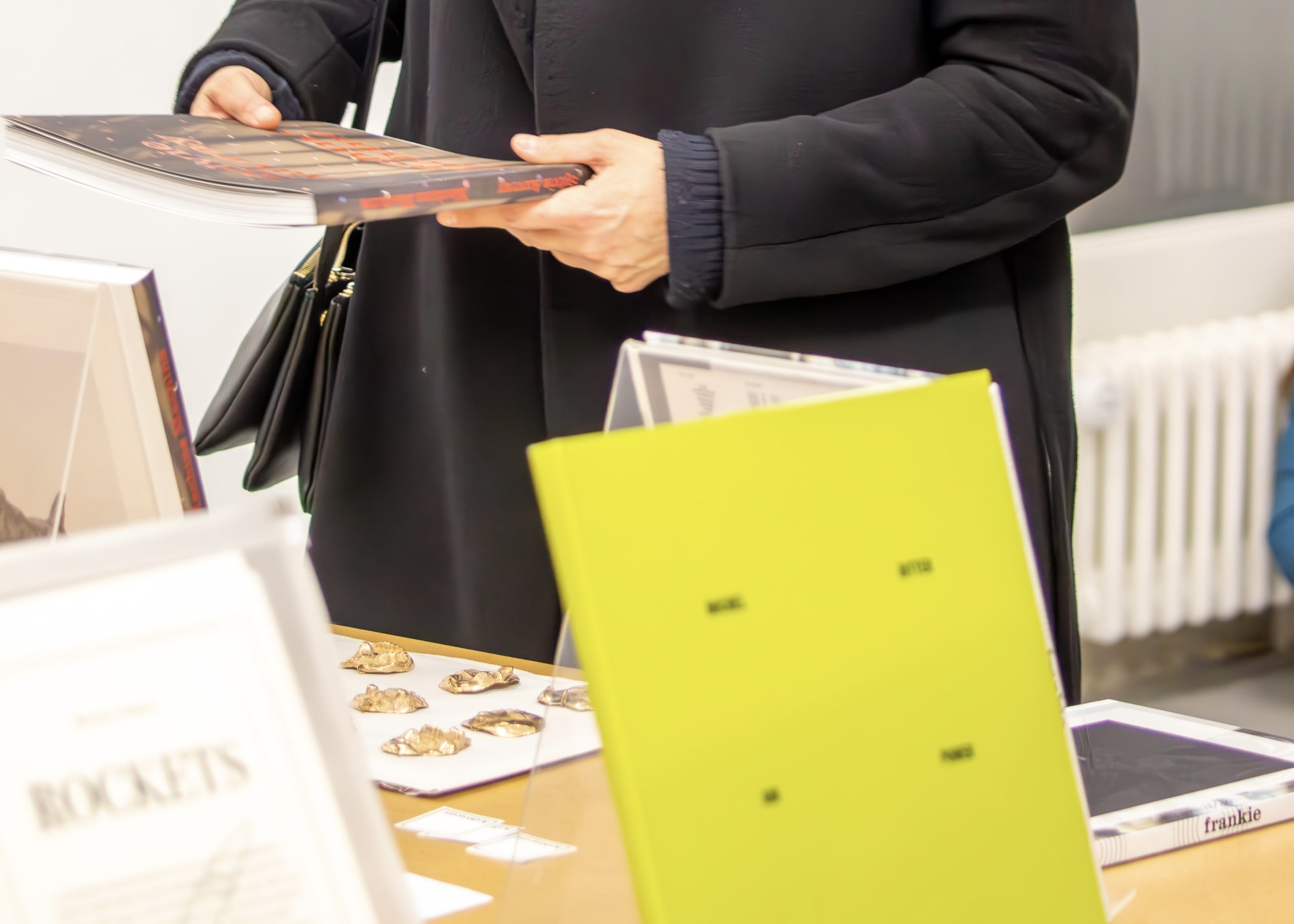
Michel Ritter, Air Power Peace Power, Nicolas Brulhart (ed.)Sylvie Auvray, Machins Machines, coedition Archivorum×M and Editions MaculaSophie Hirsch, Frankie, coedition Archivorum×M and Verlag für moderne Kunst
On 30 January, the Centre d’Édition Contemporaine in Geneva welcomes Archivorum and Kunsthalle Friart for an evening presentation featuring two of Archivorum’s newest publications and the latest monograph edited by Kunsthalle Friart.
Archivorum marks the launch of two artist books produced within the Archivorum×M programme — Frankie by Sophie Hirsch, co-published by Verlag für moderne Kunst, and Machins Machines by Sylvie Auvray, co-published by Editions Macula.
In parallel, Nicolas Brulhart will introduce the new monograph Michel Ritter, Air Power Peace Power edited by Kunsthalle Friart and published by art&fiction.
Mitchell Anderson Marc Camille Chaimowicz Miriam Laura Leonardi Christian Lindow Kristin Oppenheim Gina Proenza Michel Ritter Lou-Anna Ulloa del Rio Heimo Zobernig
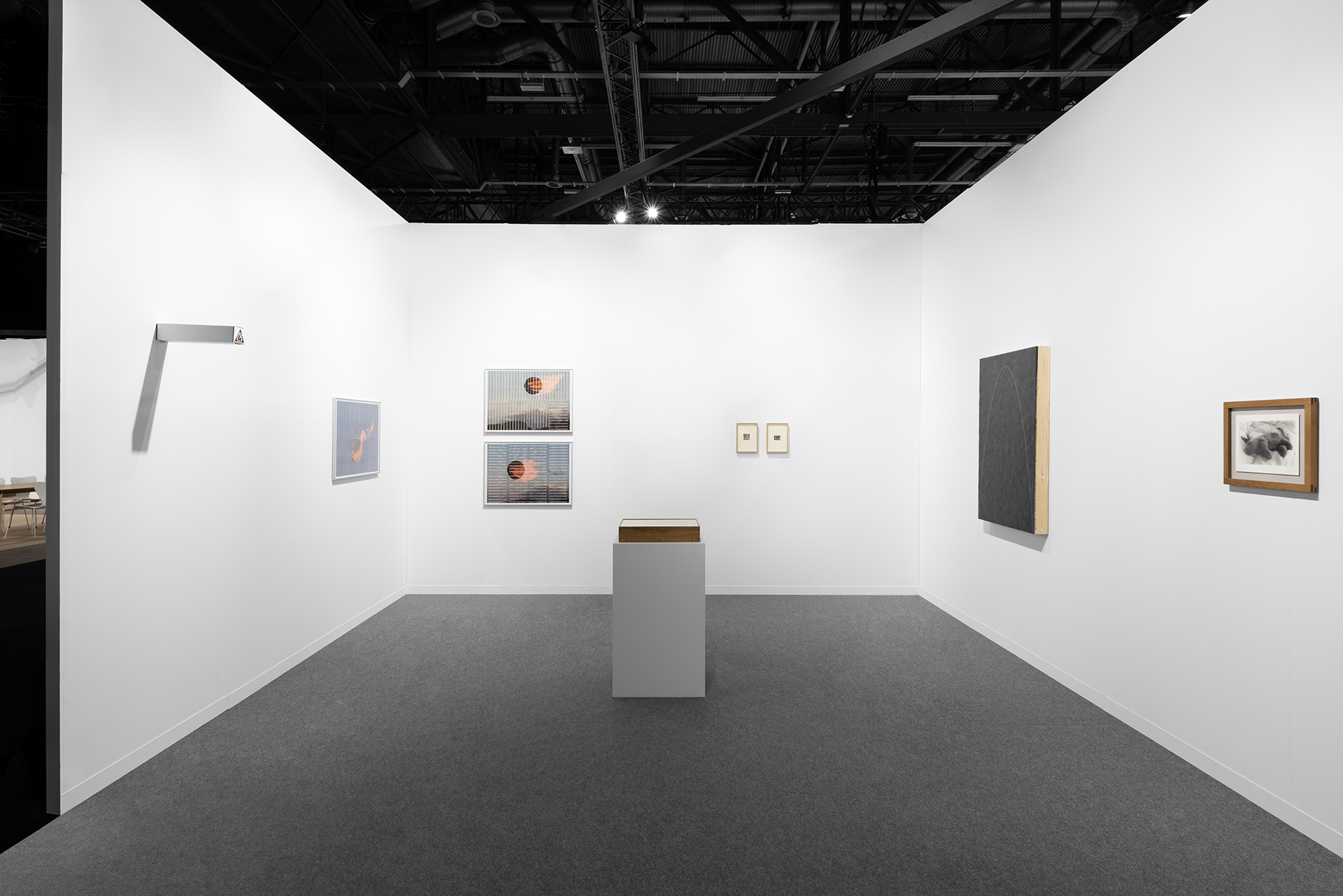
Booth view of the Centre d’édition contemporaine, Art Genève 2026. Photo : Remy Ugarte VallejosInstallation view, Art Genève 2026. Photo : Remy Ugarte VallejosInstallation view, Art Genève 2026. Photo : Remy Ugarte VallejosInstallation view, Art Genève 2026. Photo : Remy Ugarte VallejosInstallation view, Art Genève 2026. Photo : Remy Ugarte VallejosMichel Ritter, Sans titre, 1978, Art Genève 2026. Photo : Remy Ugarte VallejosGina Proenza, Every Entrance is an Exit (1474, 2026) III, 2026, Art Genève 2026. Remy Ugarte VallejosGina Proenza, Every Entrance is an Exit (1474, 2026) I and II, 2026, Art Genève 2026. Remy Ugarte VallejosLou-Anna Ulloa del Rio, Waldhaus Princess, 2025-26, Art Genève 2026. Remy Ugarte VallejosLou-Anna Ulloa del Rio, Rebel, 2026, Art Genève 2026. Remy Ugarte VallejosMiriam Laura Leonardi, GIRLS, FIRE, WATER, (Patches), 2018, Art Genève 2026. Remy Ugarte Vallejos
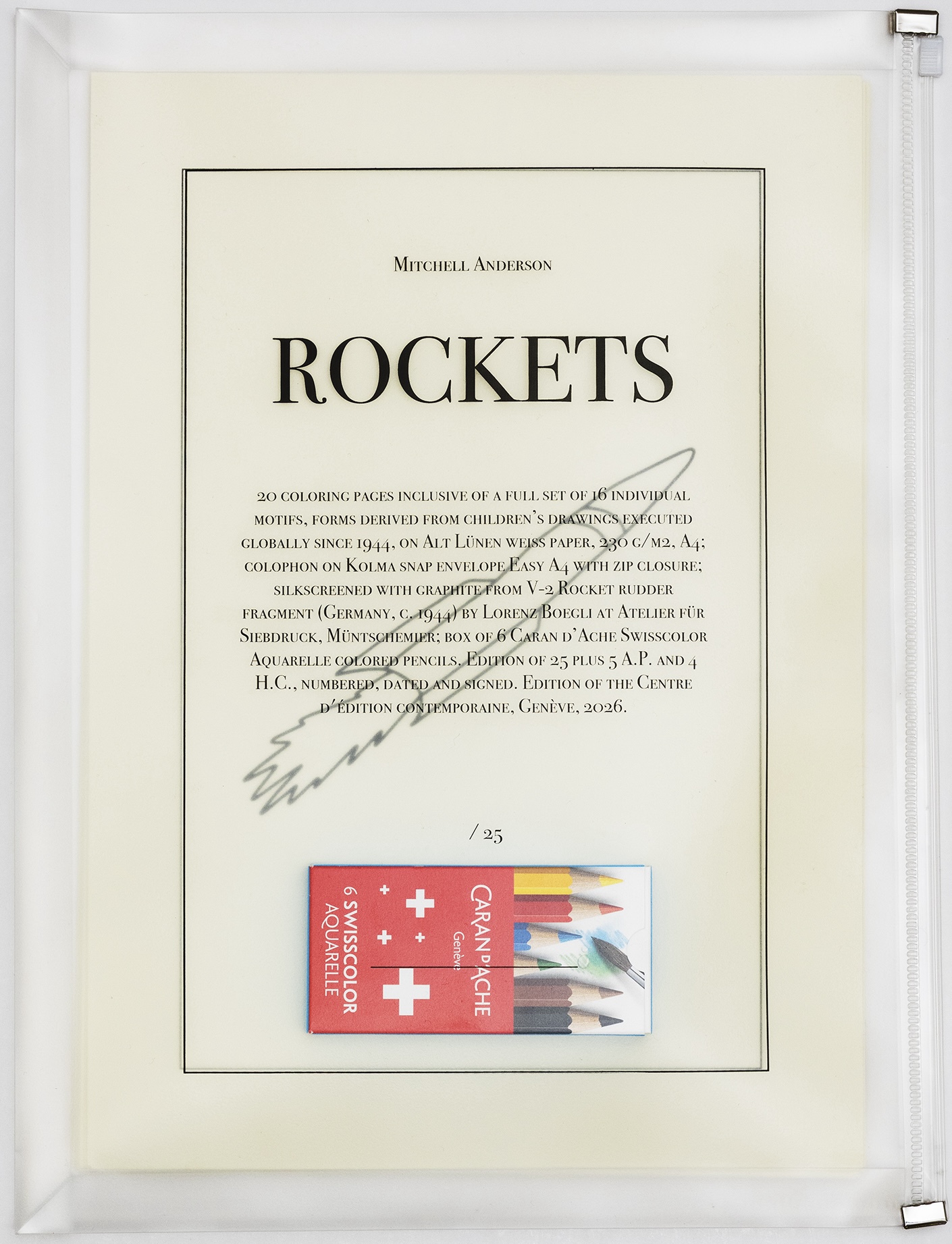
Mitchell Anderson, Rockets, ed. of the CEC, 2026. Photo : Remy Ugarte VallejosMitchell Anderson, Rockets, ed. of the CEC, 2026. Photo : Remy Ugarte VallejosMitchell Anderson, Rockets, ed. of the CEC, 2026. Photo : Remy Ugarte VallejosMitchell Anderson, Rockets, ed. of the CEC, 2026. Photo : Remy Ugarte VallejosMitchell Anderson, Rockets, ed. of the CEC, 2026. Photo : Remy Ugarte Vallejos
Mitchell Anderson, Rockets, 20 coloring pages inclusive of a full set of 16 individual motifs, forms derived from children’s drawings executed globally since 1944, on Alt Lünen weiss paper, 230 g/m2, A4; colophon on Kolma snap envelope Easy A4 with zip closure; silkscreened with graphite from V-2 Rocket rudder fragment (Germany, c. 1944) by Lorenz Boegli at Atelier für Siebdruck, Müntschemier; box of 6 Caran d’Ache Swisscolor Aquarelle colored pencils. Edition of 25 plus 5 A.P. and 4 H.C., numbered, dated and signed. Edition of the Centre d’édition contemporaine, Genève, 2026.
HISTORICAL EDITIONS FROM THE CENTRE D’ÉDITION CONTEMPORAINE
Marie Angeletti, Monica Bonvicini, Costanza Candeloro, Trisha Donnelly, Giulia Essyad, Fabrice Gygi, David Hominal, Karen Kilimnik, Elke Krystufek, Erik van Lieshout, Christian Lindow, Tobias Madison, Victor Man, Florian Pumhösl, RM, Rosemarie Trockel
Opening, Thursday, November 13, 2025, from 5 to 9 PM (Nuit des Bains)
From November 14, 2025, to January 10, 2026
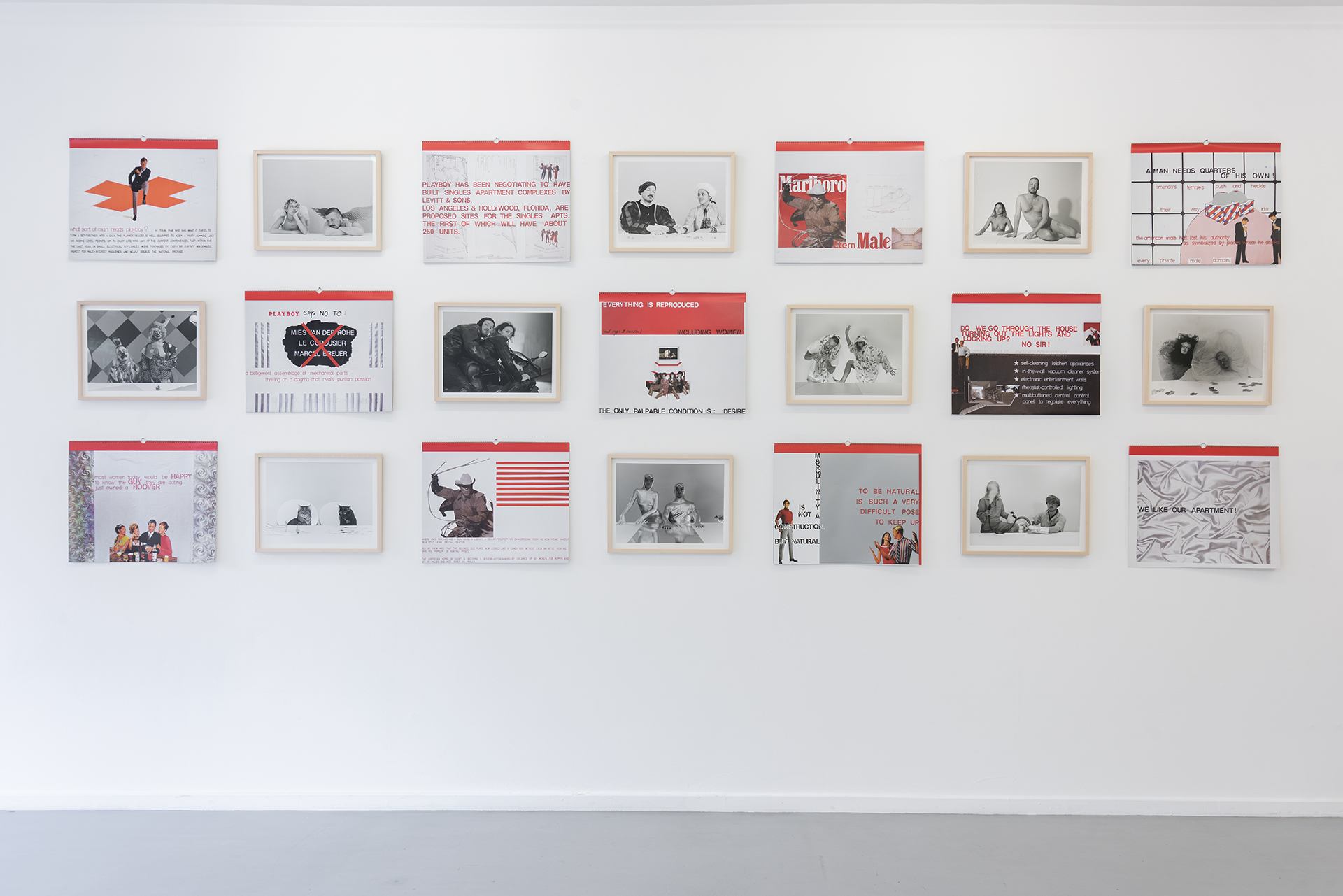
Exhibition view, The best years of our life, CEC, 2025. Photo : Remy Ugarte VallejosMonica Bonvicini, ETERNMALE, CEC, 2025 ; RM, RM photographed by Mathilde Agius, 2023, CEC, 2025. Photo : Remy Ugarte VallejosInstallation view, The best years of our life, CEC, 2025. Photo : Remy Ugarte VallejoExhibition view, The best years of our life, CEC, 2025. Photo : Remy Ugarte VallejoInstallation view, The best years of our life, CEC, 2025. Photo : Remy Ugarte VallejoInstallation view, The best years of our life, CEC, 2025. Photo : Remy Ugarte VallejoExhibition view, The best years of our life, CEC, 2025. Photo : Remy Ugarte VallejoExhibition view, The best years of our life, CEC, 2025. Photo : Remy Ugarte VallejoInstallation view, The best years of our life, CEC, 2025. Photo : Remy Ugarte Vallejos
The best years of our life is a hanging of historical editions from the Centre d’édition contemporaine. It marks a moment of transition in the life and history of the place. The new director, Nicolas Brulhart, who succeeded Véronique Bacchetta in July 2025, invites you to discover – or rediscover – an inheritance approached through a gaze both fragmented and intuitive.
The hanging unfolds as a negotiation between the scopic and the historical dimensions of vision. Imposed, diverted, or embraced, the desiring logics that emerge from this gaze form the underside of the formalist discourse of edition – one that defines itself through production, dissemination, and distribution. The Centre’s collection holds many such works, as though beneath the surface of a materialist rhetoric teemed a more impulsive, unruly force.
The best years of our life pays homage to this polymorphous, perverse, playful, and exhausted character of editions that invite reinterpretation. Where time has eroded, the hanging compensates through excess, forcing its supplement upon stories with missing flesh. In the gaze of the portrait that precedes us, the position of the viewer becomes subject to identification and disidentification. The images open a battlefield upon bodies. Their violence cannot remain repressed—it must be negotiated or discussed. Opening, cut, caesura, suspension: these are the reflexive figures of a device more mental than material.
***
At regular intervals, the Centre d’édition turns its own space into a stage for the visibility of its stock, where Hors Commerce editions constitute a repertoire from which to develop poetic and curatorial improvisations. This practice reinforces the conceptual dimension of the CEC’s endeavor—an institution that, more overtly than an art center, ceaselessly reformulates and informs its own history.
In spring 2026, a second chapter dedicated to the Centre’s collection will focus on the protean production of books, fanzines, and posters, and on their entanglement with the notion of public space.
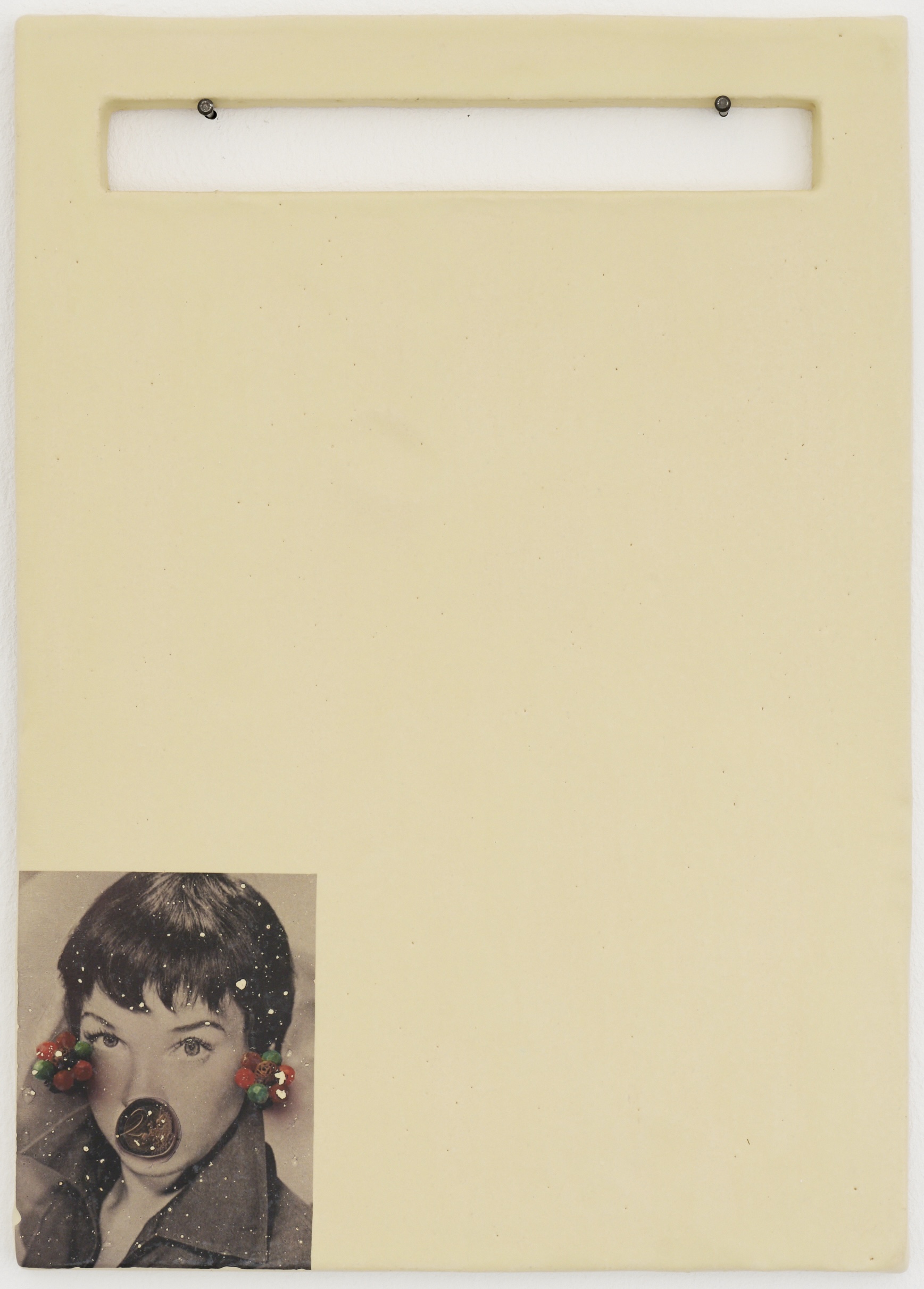
Costanza Candeloro, Glam Proof, ed. of the Centre d’édition contemporaine, Geneva, 2025. Photo : Guillaume PythonCostanza Candeloro, Glam Proof, ed. of the Centre d’édition contemporaine, Geneva, 2025. Photo : Guillaume PythonCostanza Candeloro, Glam Proof, ed. of the Centre d’édition contemporaine, Geneva, 2025. Photo : Guillaume Python
Costanza Candeloro, Glam Proof, five photographic prints, decals on ceramic, 21 cm x 29,7 cm, signed and dated. Edition of the Centre d’édition contemporaine, Geneva, 2025.
View of the exhibition Costanza Candeloro, Different kinds of wants, CEC, 2025. Photo : Guillaume PythonCostanza Candeloro, Glam Proof, éd. du Centre d’édition contemporaine, Genève, 2025. Photo: Guillaume PythonCostanza Candeloro, Glam Proof, ed. of the Centre d’édition contemporaine, Geneva, 2025. Photo : Guillaume PythonCostanza Candeloro, Glam Proof, éd. du Centre d’édition contemporaine, Genève, 2025. Photo: Guillaume PythonCostanza Candeloro, Glam Proof, éd. du Centre d’édition contemporaine, Genève, 2025. Photo: Guillaume PythonCostanza Candeloro, Glam Proof, éd. du Centre d’édition contemporaine, Genève, 2025. Photo: Guillaume PythonView of the exhibition Costanza Candeloro, Different kinds of wants, CEC, 2025. Photo : Guillaume PythonCostanza Candeloro, Reduction, CEC, 2025. Photo : Guillaume PythonCostanza Candeloro, Reduction, CEC, 2025. Photo: Guillaume PythonCostanza Candeloro, Re-Assembled Fortune (détail), CEC, 2025. Photo : Guillaume PythonCostanza Candeloro, Re-Assembled Fortune (détail), CEC, 2025. Photo: Guillaume PythonCostanza Candeloro, Re-Assembled Fortune (detail), CEC, 2025. Photo : Guillaume PythonCostanza Candeloro, Re-Assembled Fortune (detail), CEC, 2025. Photo : Guillaume PythonView of the exhibition Costanza Candeloro, Different kinds of wants, CEC, 2025. Photo : Guillaume PythonCostanza Candeloro, De-Evaluation, CEC, 2025. Photo: Guillaume PythonCostanza Candeloro, Expectation / Access, CEC, 2025. Photo : Guillaume Python
Costanza Candeloro’s works, informed by intellectual, poetic and literary references, develop like stages in a thought process in motion. Between life and work, body and image, production and reproduction, this movement deconstructs the internal hierarchies of signs and identifications.
Rather than focusing on a single technique or medium, the artist’s practice involves the circulation, dissemination and transition from one medium to another. Playing on these shifts, the work creates the conditions for an active and open reception which runs counter to the trends of the cultural industry and property.
***
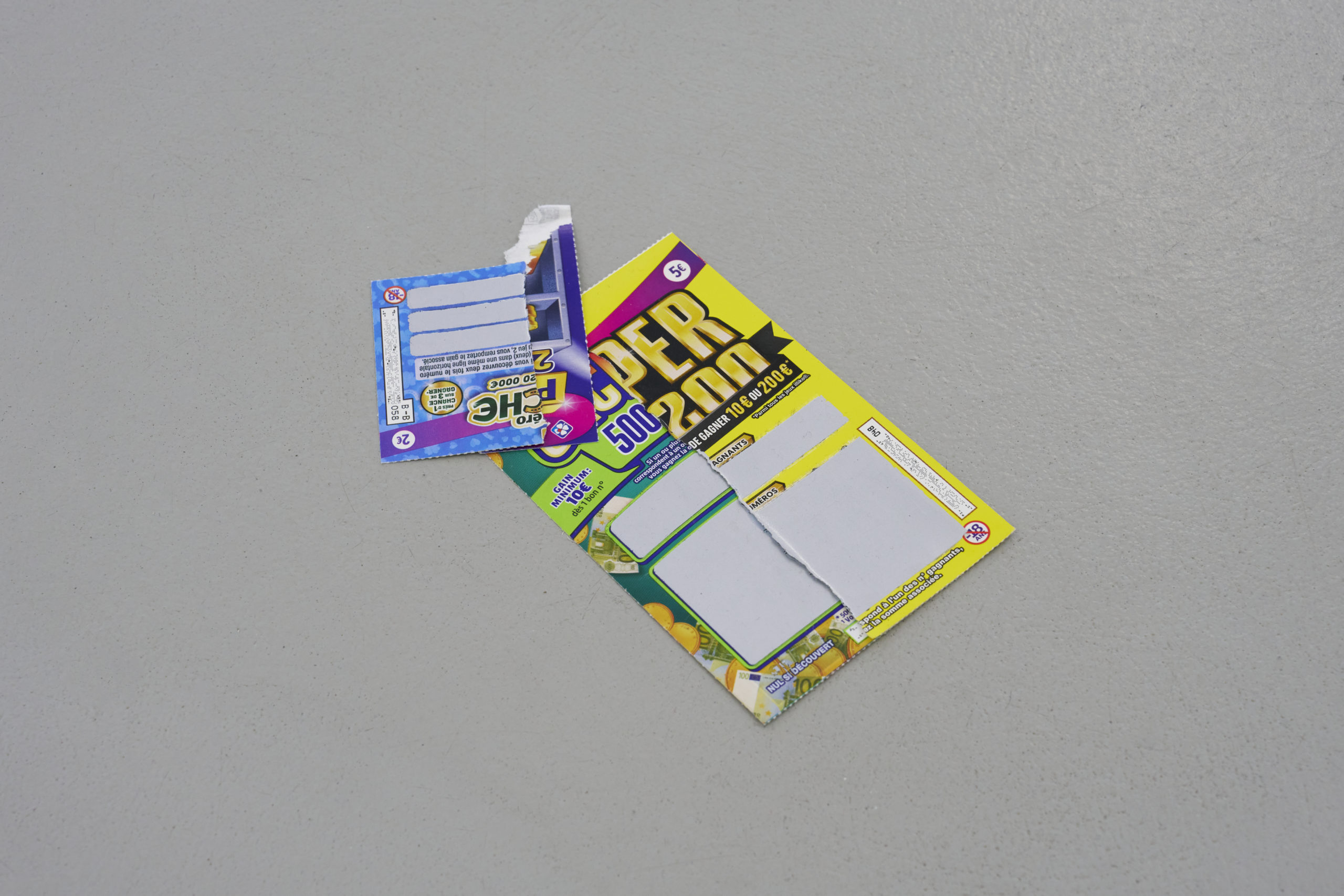
For her first solo exhibition in a Swiss institution, the artist presents a coherent collection of new works produced for the occasion, as well as an edition of five printed ceramics*. In Different kinds of wants, she alters seemingly innocuous objects and picks apart the illusory anchoring of value in things. Through her reworking of shoes, jumpers, scratch cards and cosmetics, the artist condemns the mechanisms of seduction of supposedly unique products.
The corrections conflate the techniques of art with those of commerce. In their passion for form, both rely on appearance. The magic of light, whose mystery remains intact: “At first glance, a commodity appears to be something trivial and self-explanatory. But for the artist, it is a very complex thing, full of metaphysical subtleties and theological nuances.”Far removed from any contemporary sophistication, with a ancient presence, the works open up to time and the necessity of production.
Costanza Candeloro (1990; Bologna, Italy) lives and works in Paris. She graduated from HEAD (Geneva University of Art and Design) in 2020 and is represented by the Martina Simeti Gallery, Milan. The artist will open an exhibition at the Swiss Institute in New York at the end of September 2025. Recent exhibitions include: Tout le temps de vie est temps de travail, Sihl Delta, Zurich (2024); Possessed is The Style, Austellungsraum Friedensgasse, Zurich (2024); C&G, with Gritli Faulhaber, Swiss Institute, Milan (2023); ENVY & GRATITUDE, Martina Simeti, Milan (2022); My Skin-care, My Strength, ICA Milano, Milan (2022); Sweet Days of Discipline, La Plage, Paris (2022). With Francesca Ciccone, she also runs Licit Illicit Bookshop, a mobile book platform that explores the connections between rarity and radicalism.
Costanza Candeloro’s exhibition is supported by Dr. Georg und Josi Guggenheim Foundation and of the Department of Culture and digital Transition of the City of Geneva.
Denis Savary presents two portraits of artists with whom he has been in dialogue for several years, John M Armleder and Giulia Essyad. These two video portraits and two original works resonate with the program of the Centre d’édition contemporaine, where both artists were invited to produce editions: John M Armleder in 1992 and 2024, and Giulia Essyad in 2022 and 2024.
These two portraits depart from the classical approach to the genre, which typically documents and analyzes the artist’s work or personality. Savary instead focuses on recurring and distinctive elements of each artist’s practice – practices that, at first glance, seem to oppose one another: plants for Armleder, and her own body for Essyad.
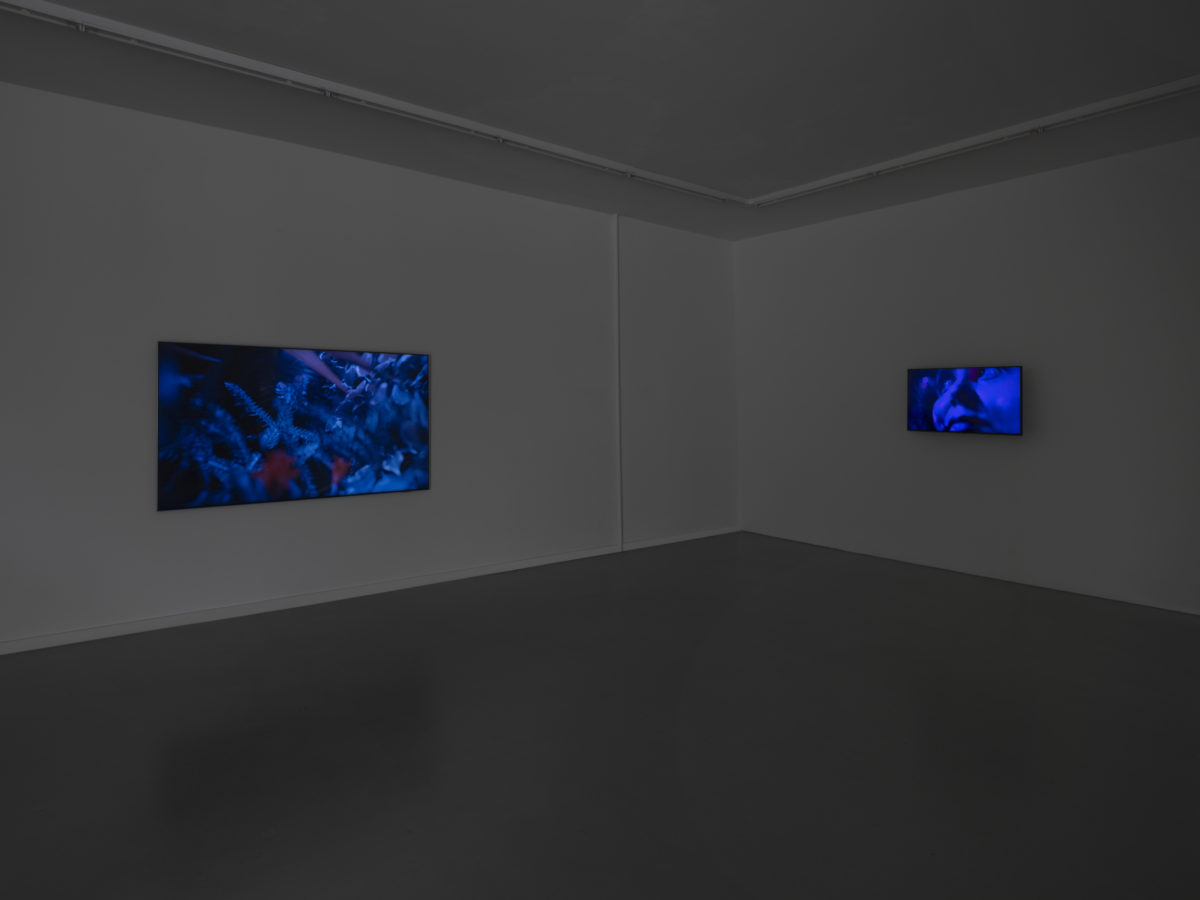
Savary sees these two productions as a continuation of Blood on the Dining-Room Floor, the video he presented during his 2024 exhibition Quiet Clubbing at the Centre d’édition contemporaine. In both Armleder’s and Essyad’s portraits, we find the recurring theme of confinement within transparent spaces that characterized that earlier video – a kind of return to the past, featuring a light show in the style of a “rural discotheque”, projected onto the walls of his childhood home, turned into a screen. For John M Armleder, Savary creates a botanical garden inside a car interior, which is then driven through a car wash. The transparency and gloss of the windows are heightened by beams of light, water, and foam cascading over the glass, giving the illusion of artificial aquatic plants – all in perfect harmony with the soundtrack of Hawaiian music selected by John M and Stéphane Armleder. In Giulia Essyad’s portrait, the artist’s face appears in the darkness of an indoor laser tag game. The beams of light transform her into an otherworldly being, illuminated by an intense blue reminiscent of the Bluebots – her doubles, small figurines that appear throughout her video works.
Like Blood on the Dining-Room Floor, these new projects explore both the medium and the structure of video itself. Car Wash becomes a kind of psychedelic aquarium, where the image of washing water is projected onto dry plants, evoking splashes – a recurring motif in Armleder’s work. The video Giulia is similarly structured around an effect of projected light: the laser tag environment alternately merges with and reflects off Essyad’s face. The artist, like a ghost trapped inside a television screen, reveals – through transparency – the space she seems to haunt.
Denis Savary, Car Wash, portrait de John M Armleder, video, color, 38’40’’. Sound: compilation of Hawaiian music by John M and Stéphane Armleder. Camera: Margot Sparkes. Editing: Nicolas Ponce. Vegetal Set Design: Stella Falcoz. Acknowledgements: Hélène de Ryckel, Daniel Mudrecki, Car Wash SWISSWASH, Plan-les-Ouates, John M Armleder and Lena Guevry. Produced by Centre d’édition contemporaine, Geneva, 2025Denis Savary, Giulia, portrait de Giulia Essyad, video, color, music, 03’48”. Camera: Margot Sparkes. Editing: Nicolas Ponce. Make-up: Morgane Gillioz. Acknowledgements: Giulia Essyad and Laser Game, Geneva. Produced by Centre d’édition contemporaine, Geneva, 2025
Denis Savary (1981) lives and works in Geneva. His work has been shown in numerous solo exhibitions, most recently: Nashville, Kunsthaus Centre d’art Bienne, KBCB (2025) ; Quiet Clubbing, Centre d’édition contemporaine, CEC, Genève (2024) ; Roma, Roma, Roma, Rolex Learning Center, Ecole polytechnique fédérale de Lausanne (2024) ; Josy’s Club, with Pierre-Olivier Arnaud, Synagogue de Delme (2023); Octogone, with Chloé Delarue, Mayday, Basel (2023); Flower of Fog, GNYP Gallery, Berlin (2022); Ambarabà Ciccì Coccò, with Alfredo Aceto, Kunst Halle Sankt Gallen, St. Gallen (2021). Recent group shows include Frau in Blau. Oskar Kokoschka und Alma Mahler, Museum Folkwang, Essen (2025); Le MAMCO, de mémoire, MAMCO, Geneva (2024); Temps de Mars, Musée des Beaux-Arts, La Chaux-de-Fonds (2024); The Big Chill, Galerie Maria Bernheim, London (2023); Mirage, MCBA, Lausanne (2023); Deep Deep Down, MUDAM Luxembourg, Luxembourg (2023); The Puppet Show, Centre d’art contemporaine, Geneva (2022).
This project is supported by the Office fédéral de la culture et de la République et canton de Genève.
In 1996, Heimo Zobernig produced an emblematic edition for the CEC. At the time, Zobernig’s focus was on handmade and artisanal objects. His method? Printing old, damaged and broken lithographic stones. These stones, of which there were 15, were simply polished, then coated with black ink, the printing being limited to a simple transfer onto the paper, revealing shapes and lines resulting from the breaks in these modified surfaces, as they were. These 15 lithographs were reduced to a black, monochrome surface, each printed in an edition of four copies, one e.a. and one H.C. These black rectangles or squares on a white background bore direct comparison to Malevich’s historic black square, with all the distancing, irony and mischief contained in this gesture. Zobernig deconstructs and simplifies the historical references to modernism and minimalism with which his work is associated, shifting them to the field of design and graphics. The technical criteria of a craft – at the time, lithography – are also taken literally: a surface coated with ink, transferred directly onto a sheet of paper, the only motif being the lines of the breaks in this series of stones, found in an old stockpile, forgotten and unusable. A kind of game with a local situation, that of this obsolete workshop from another time, playfully reactivated.
Zobernig pushes his quest for simplification, clarity and neutrality to the level of the simple object. Artistic expression is reduced to a minimum. His strategies include objectification, reduction, standardisation and systemisation. This distancing enables him to shift his perspective, to cultivate a pragmatism that is always tinged with irony, free from pathos, and foremost determined by an unwavering search for autonomy. In reality, Zobernig approaches text like a graphic designer; colour like a “scientist”; objects like an industrialist; space like a scenographer or an architect.
The artist’s production system is broken down into several series, including the shelving structures and bookcases that seem to have been inspired by the famous Billy model, emblematic of Ikea furniture shops. An ironic reference, perhaps, to the modules created by Donald Judd or those used in Robert Morris’ scenographies. These bookcase-structures first appeared in his solo exhibition at the Kunsthalle Zürich in 2011, then at the Museum Bärengasse in 2015, at the KUB in Bregenz and, more recently, at the Mumok in Vienna in 2021. These large series of bookcases are transformed into exhibition displays, architectural structures that intersperse, enter into dialogue with, and sometimes exalt or outright transform the architecture of these institutions.
For some years now, Zobernig has been introducing colour and material variations into his work, as well as sculptural figures, like mannequins in a shop window: non-gendered, schematic, standard human bodies. Geometric, modular figures with balanced proportions, envisaged as elements of architecture, in the image of Le Corbusier’s Modulor. Other stereotypes spring to mind, emblems of the monumental statuary: from ancient statues to the robot-women in Metropolis, Georg Kolbe’s sculpture Der Morgenfor Ludwig Mies van der Rohe’s German Pavilion in Barcelona, and even statuettes from the Oscars or Hollywood film credits.
Zobernig introduces a break with this monumental, authoritarian classicism. He manipulates, deconstructs, literally turns his figures upside down and sometimes even disguises them. As composites, they are made up of several body parts from different sources: the artist’s head or body glued to bits of old sculptures. Others are reduced to their production method: from 3D to the first bronze casts, left in their raw, unfinished state, broken, more or less well reconstructed, oxidised, chipped or rusted. Some mannequins hang from the shelves of his bookcase-structures, twisted, dislocated, more dramatic, oscillating between mummified, digital and archaic beings.
Zobernig also uses his own body, practising self-reference and self-mockery. In a video made in 1989 (No. 3), he dances, wearing an improbable wig with long hair made of chiffon. He re-enacted this scene in 2023 (no 33), wearing a similar outfit. His body and gestures had changed, becoming stiffer, clumsier, more tired: distancing and irony applied to himself.
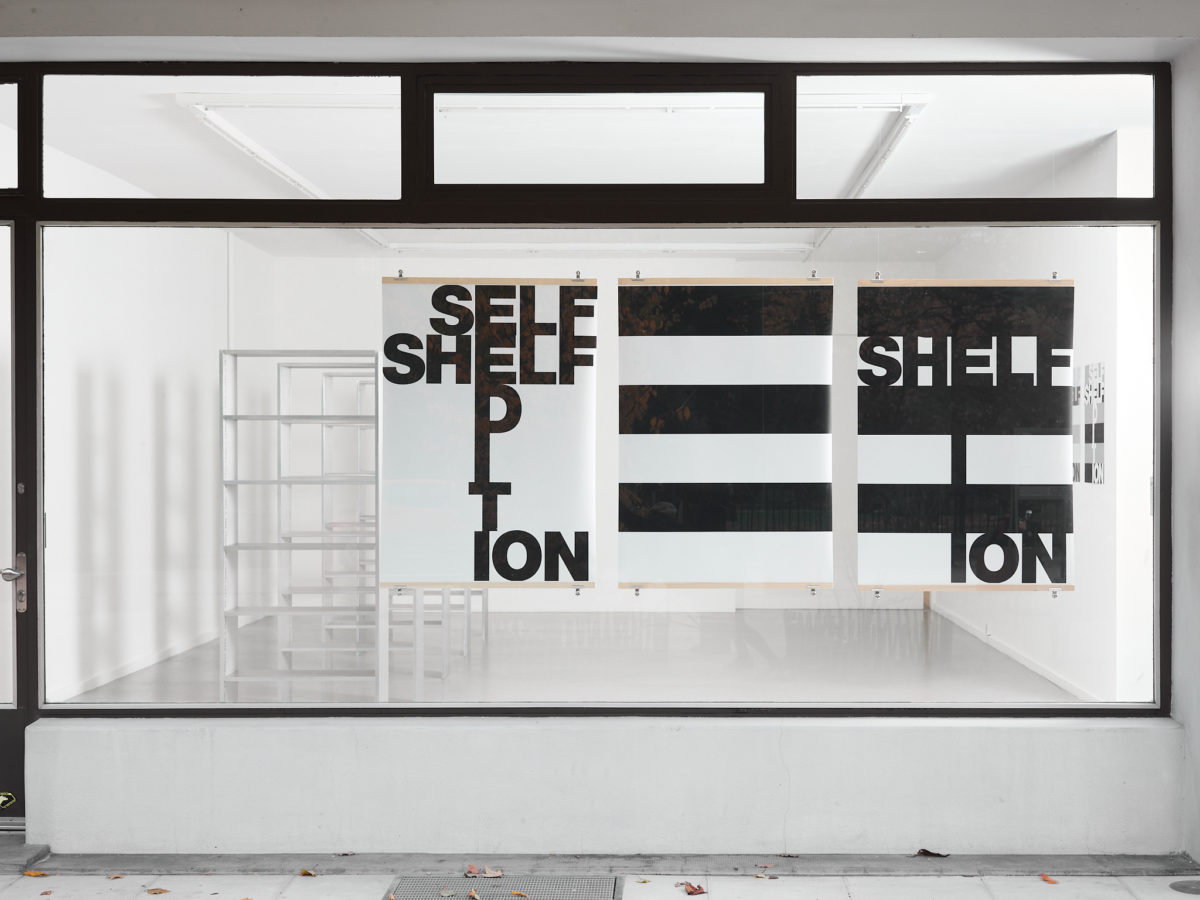
Heimo Zobernig’s exhibition at the CEC features a range of productions and editions: five metal bookcases; three screenprints in three combinations of colours and three different qualities of paper (black/white/silver), made up of horizontal lines and the words SELF SHELF EDITION: self-editions, self-shelves, shelf-editions. SELF SHELF, the phonetic proximity of these two words, typographical too, with an extra H between SELF and SHELF, H as in Heimo, H as in a shelf. A play on sounds and words, an association that Zobernig makes with humour between himself and a shelf. These “crosswords” could well have been the title of this exhibition: objects produced, edited and exhibited together with their production system. Shelves, screenprints, flyers and posters produced in Vienna and Geneva, by Zobernig and the CEC, from a distance.
The three 50 x 70 cm screenprints, each with a print run of 10, are also available as flyers (200 copies of one of the screenprints on a white background, paper size: A4) and three posters (three copies, in F4 format). Each of these large posters is printed in black, breaking down and recomposing the different elements: one poster with only the horizontal lines, another with only the words, and the third with the lines and the words.
Heimo Zobernig was born in Mauthen in 1958. He lives and works in Vienna. Some of his most recent exhibitions include: Heimo Zobernig & László Moholy-Nagy, Galerie Nagel Draxler Crypto Kiosk, Berlin (2024); Heimo Zobernig, Galerija Manuš, Split (2024); Richard Hoeck/Heimo Zobernig, 1997/2013, Meliksetian Briggs gallery, Los Angeles (2024); Heimo Zobernig, Meyer Kainer Gallery, Vienna, (2024); Heimo Zobernig, Galerie Chantal Crousel, Paris (2023); Heimo Zobernig.Der Bildhauer als Zeichner, Kunstraum St. Virgil, Salzburg (2023); Das GrafischeWerk, Museum der Moderne, Salzburg (2022); Heimo Zobernig. tHIs oLD nEw, Galerie Bärbel Grässlin, Frankfurt (2022); Enjoy, MUMOK, Vienna (2021); Heimo Zobernig.Spirit Fuck Painting, MARe, Bucharest (2022). His work has also featured in various group exhibitions, including ECCENTRIC. Aesthetics of Freedom, Pinakothek der Moderne, Munich (2024); Kiesler Today.Work dialogues with contemporaries, Kunsthaus Zug, Zug (2024); Bernard Frize, Matt Mullican, Niele Toroni, Heimo Zobernig, Galerie Micheline Szwajcer, Antwerp (2024); From the Collection: Together – Collaborative Art Practices, S.M.A.K., Ghent (2024); Dan Graham.Optics and Humor, Galerie Meyer Kainer, Vienna (2024); Galerie Christine Mayer, Munich (2024); Soliloquies, Petzel Gallery, New York (2024); Blank.Raw.Illegible. Artists’ Books as Statement(1960-2022), Leopold-Hoesch-Museum, Düren (2023) ; HERE AND NOW II. Vienna Sculpture 2023, Neuer Kunstverein Wien, Vienna (2023); Out of the Box, Schaulager, Basel (2023); Alvin Baltrop, WadeGuyton, Heimo Zobernig, Galerie Francesca Pia, Zurich (2022); Avant-garde and Contemporary Art, Belvedere Museum Vienna, Belvedere 21, Vienna (2022); The Drawing Centre Show, Consortium Museum, Dijon (2022).
With the editions, artist’s books and multiples of Marie Angeletti, John Armleder, Artists’ Voices, Paul Bernard, Laurence Bonvin, Harry Burke, Yann Chateigné Tytelman, Liz Craft, Guillaume Dénervaud, Anne Dressen/Nick Mauss, Giulia Essyad, Mathis Gasser, David Hominal, Dorothy Iannone, Victor Man, Paul Paillet, Caroline Schattling Villeval, Susan Te Kahurangi King, Paul Viaccoz
John Armleder, Lézards Sauvages III (1979) 2024, six leporellos, offset print on 6 colored sheets, yellow and pink, 42 x 20 cm, from the edition, Lézards Sauvages IIa/ « égouttés », edited by Galerie Marika Malacorda, Geneva, in 1979, from the artist’s archives. The six leporellos, without having been previously used, folded and signed, have been mounted on a 300gsm sheet, 85 x 65 cm, on which the “Splash” motif has been screen-printed in one color (gold). This edition of the CEC, Lézards Sauvages III, (1979) 2024, consist of 20 copies, 3 A.E. and 2 H.C., uniques, titled, numbered, dated and signed. Edition of the Centre d’édition contemporaine, Geneva, 2024.
Framed exhibition copy (gold frame)
CHF 3’000.- (per silkscreen)
John Armleder, Lézards Sauvages IV (1979) 2024, six leporellos, offset print on 6 colored sheets, yellow and pink, 42 x 20 cm, from the edition, Lézards Sauvages IIa/ « égouttés », edited by Galerie Marika Malacorda, Geneva, in 1979, from the artist’s archives. The six leporellos, without having been previously used, folded and signed, have been mounted on a 300gsm sheet, 85 x 65 cm, on which the “Splash” motif has been screen-printed in one color (silver). This edition of the CEC, Lézards Sauvages IV, (1979) 2024, consist of 20 copies, 3 A.E. and 2 H.C., uniques, titled, numbered, dated and signed. Edition of the Centre d’édition contemporaine, Geneva, 2024.
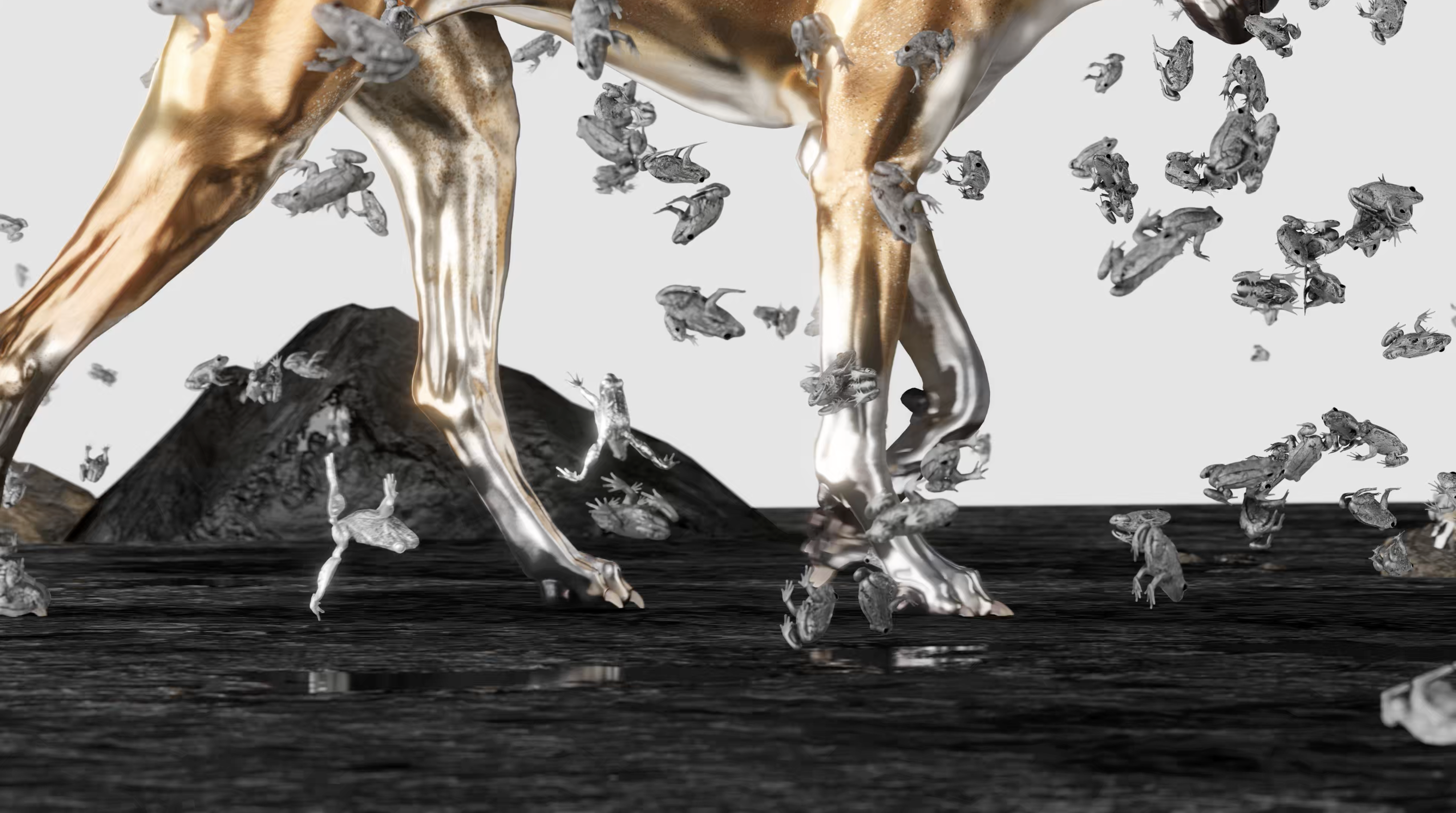
Caroline Schattling Villeval, When a frog meets a dog, animation video, loop, 5′, 2024
At the bottom of an almost dry lake, frogs are gathered around a puddle. Their movements, slowed down and almost imperceptible, bring life to this deserted landscape. A dog appears. Imposing, his body extends beyond the frame. His walk sets off a panoramic, moving shot.
Thus begins Caroline Schattling Villeval’s video When a frog meets a dog, produced for her exhibition Carences et toute-puissance1. This new piece functions as a continuation of her installation good boy (Hasch, Marseille, 2023) which revolved around the fictional text Vie/Chienne, that explores the question of domination arising from a non-consensual interaction between a person and a dog with a wandering tongue2. Once again, the animal is one of the main protagonists of Caroline Schattling Villeval’s video When a frog meets a dog, this time alongside a group of frogs.
With his massive, slender body and golden fur, the dog, animated by Caroline Schattling Villeval, moves forward in a menacing manner. He appears to be indifferent to everything, including the amphibians which have come together to stop his march. Piled up in the shape of a column, they form a mass in front of this manifestation of almighty power. The counter-power embodied in the group’s strength is swept away, pushed aside by a paw. It’s not strong enough. A crushing failure even: it’s raining frogs. They splash into the exhibition space, contaminating the room. The almighty power triumphs over the collective strength. End of the story. However, in Caroline Schattling Villeval’s work, the power dynamics also manifest themselves in an underlying manner through the technical process. A dog, frogs, a 3D-modelled bestiary bought online like one would adopt a pet: an act of domination. Then comes the computer, far from functioning autonomously as the artist manipulates her virtual puppets through an animation software. Finally, the dog, never fully visible, dominates the frogs as well as the space. The dog, the first animal species domesticated by Man – its « best friend » –, that Caroline Schattling Villeval has trained to perform its own dance. The image is replayed in a loop, but who’s calling the shots? When a frog meets a dog is a canvas onto which power dynamics are superimposed in infinite layers.
1. In parallel with her exhibition at the Centre d’édition contemporaine, Caroline Schattling Villeval presents StéréoMimicryat the Salle Crosnier, Palais de l’Athénée, from January 12 to February 10, 2024. 2. Vie/Chienne was written by Caroline Schattling Villeval in 2023 for [SWISS] Weird & Magic #1, forthcoming publication by éditions Clinamen.
Born in 1995 in Zürich, Caroline Schattling Villeval lives and works in Geneva. Her work has been exhibited in various venues in Switzerland and abroad in solo shows such as : StéréoMimicry, Salle Crosnier, Geneva (12.01–10.02.2024) ; good boy, Hasch, Marseille (2023) ; No firing, with Paul Paillet, Espace 3353, Carouge (2021) ; Chiara Chiara Chiara, Zabriskie Point, Geneva (2020) ; Being fucked, Lokal-int, Biel (2020). She has also taken part in several group exhibitions, including: Basel Social Club with Joyfully waiting, Basel (2023) ; MINIMIRACLES, Sonnenstube, Lugano (2023) ; Bourses déliées – Arts Visuels, Halle Nord, Geneva (2022); Prix Kiefer Hablitzel, Art Basel, Basel (2022) Esprit d’Escalier, with Paul Paillet, Centre d’édition contemporaine, Geneva (2022) ; Plaisirs Minuit, Forde as part of the Fesse-tival, Geneva (2022) ; Peeping through the looking glass, Set Space, London (2021) ; Fotoromanza, Le Commun, Geneva (2021) ; Silicon Malley, Prilly (2020) ; Weaving home, Limbo Space, Geneva (2020).
This project is sponsored by the Federal Office of Culture and the Republic and the Canton of Geneva.
With publications and editions of Marie Angeletti, Artists’ Voices, Paul Bernard, Laurence Bonvin, Harry Burke, Yann Chateigné Tytelman, Liz Craft, Keren Cytter, Guillaume Dénervaud, Anne Dressen/Nick Mauss, Giulia Essyad, Mathis Gasser, David Hominal, Dorothy Iannone, Matthew Lutz-Kinoy, Victor Man, Paul Paillet, Mai-Thu Perret, Susan Te Kahurangi King, Paul Viaccoz
Don’t look at your phone first thing in the morning, box, varnished cardboard, seven stabilized grey roses, title in sticker from on the floor, 34 x 31 x 9 cm, ed. of the CEC, Geneva, 2023
Sold out
You are not for everyone, box, varnished cardboard, four stabilized pink tuberoses, title in sticker from on the floor, 30 x 12,5 x 15 cm, ed. of the CEC, Geneva, 2023
CHF 800.-
Prepare the new normal, box, varnished cardboard, twenty stabilized grey roses, title in sticker from on the floor, 20 x 23 x 24 cm, ed. of the CEC, Geneva, 2023
Sold out
Human nature is no excuse, box, varnished cardboard, one stabilized burgundy rose, title in sticker from on the floor, 26,5 x 22,5 x 22,5 cm, ed. of the CEC, Geneva, 2023
CHF 800.-
Emotions come and go, box, varnished cardboard, four swiveling wheels, two stabilized white gerberas, title in sticker from on the floor, 44 x 30 x 30 cm, ed. of the CEC, Geneva, 2023
CHF 1’200.-
Don’t underestimate the power of staying in bed, box, varnished cardboard, one stabilized grey rose, title in sticker from on the floor, 37, 5 x 25, 5 x 24 cm, ed. of the CEC, Geneva, 2023
CHF 1’000.-
Dreams are the raw material of reality, three boxes, varnished cardboard, four stabilized orange zinnias, title in sticker from on the floor, 35,5 x 31 x 17,5 cm, ed. of the CEC, Geneva, 2023
Sold out
You don’t know how powerful you are, plank, varnished cardboard, three stabilized grey roses, title in sticker from on the floor, 60 x 37 x 5 cm, ed. of the CEC, Geneva, 2023
CHF 1’200.-
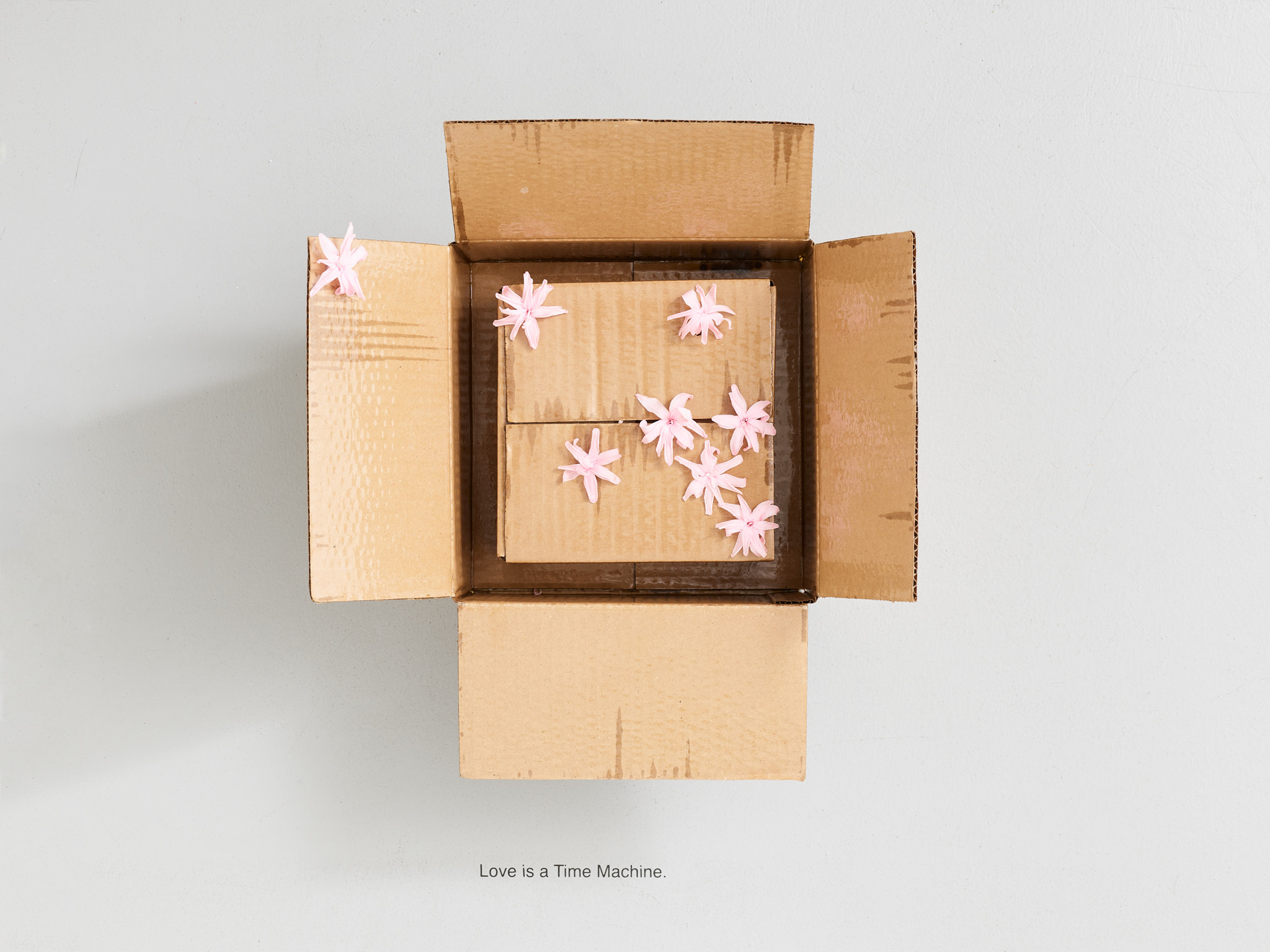
Love is a Time Machine, two boxes, varnished cardboard, eight stabilized pink tuberoses, title in sticker from on the floor, 45 x 39 x 28, 5 cm, ed. of the CEC, Geneva, 2023
Biennale di Veneziávs. Karim Benzema Invited by Véronique Bacchetta vs. Federico Santiago Valverde Dipetta Other People’s Clothes vs. Rodrygo Goes Étudiants aux Beaux Arts vs. Eden Hazard Uber Triennale Curatior vs. Vinicius Paixao de Oliveira Junior Crits’n’Reviews vs. Toni Kroos Caravaggio’s Chiaroscuro vs. Jesus Vallejo Lazaro Your Artist Fee vs. Aurélien Tchouaméni Mille Plateaux vs. Eder Gabriel Militão RM’s Instagram Erotic vs. Luka Modric Artistas Unidos Vámonos vs. Daniel Carvajal Ramos
Until the End, Come on Real.
A Play (Off) by Miriam Laura Leonardi, April 2023
SOLO TÚ RM at CEC 2023
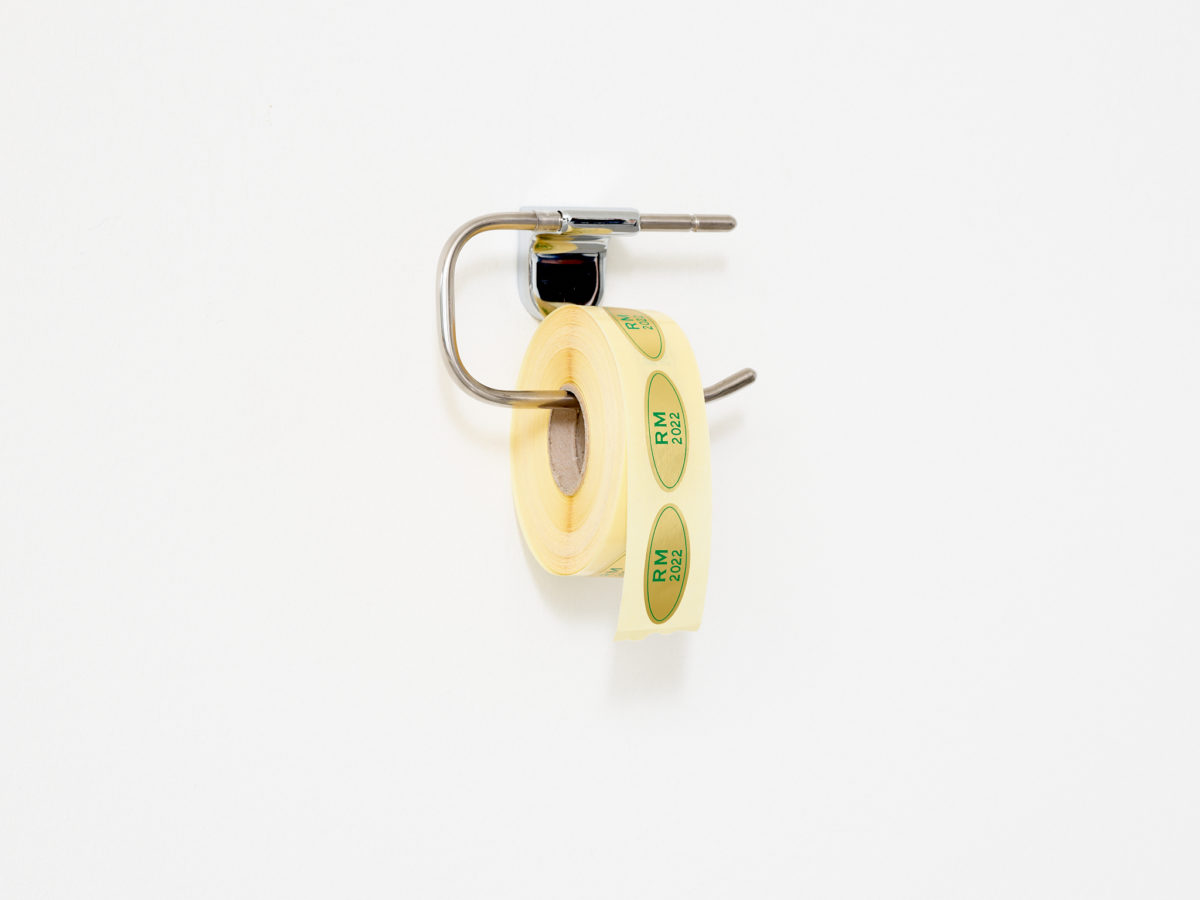
Until last summer we used to go by a name written Real Madrid, pronounced either rɪəl məˈdrɪd, or ře’al ma’ðrid. After legal threats by a namesake company we had to disown that moniker and disclose being unpatented knockoffs. It was a matter of ticking time, of who trademarked facts first and once – for the moment we use the shortened RM but pronunciation stays unaltered. We want this show to be an unbaptism, a debut against copyrighted one-off geniuses, an and to a story, a stack of counterfeit merch and a spoonful of the shared minestrone of ideas, and also another unoriginal show about identity.
The b/w images you see have been taken by Mathilde Agius.
RM
The RM’s exhibition is supported by Ernst und Olga Gubler-Hablützel Foundation, Dr. Georg und Josi Guggenheim Foundation and the City of Geneva.
Jonathan Monk proceeds by method, by series. He creates scores that, once established, are carried through, this second part not being necessarily the most important step. These scores might be considered as a broader form of editing and some of its parameters: image reproduction rights, copyright, artistic property. Jonathan Monk is the perfect candidate for edition, because for him original and copy most importantly represent endless and free possibilities of crossings, of clouding issues and of conceptualization, all this above their commercial value. Monk revisits some artistic standards often in the form of multiples, like an actor who would re-enact his classics, practice his scales. He maintains an ironic distance to art – most often to conceptual art – but also takes a similar amused and critical look at society and its excesses. Monk stages and experiences the proliferation of signs, might they be artistic or consumerist, as a daily invasion of our living and mental space. He recomposes and reorganizes these signs in order to reveal all their absurdity with a discrepancy that is more often affective and autobiographical than it seems.
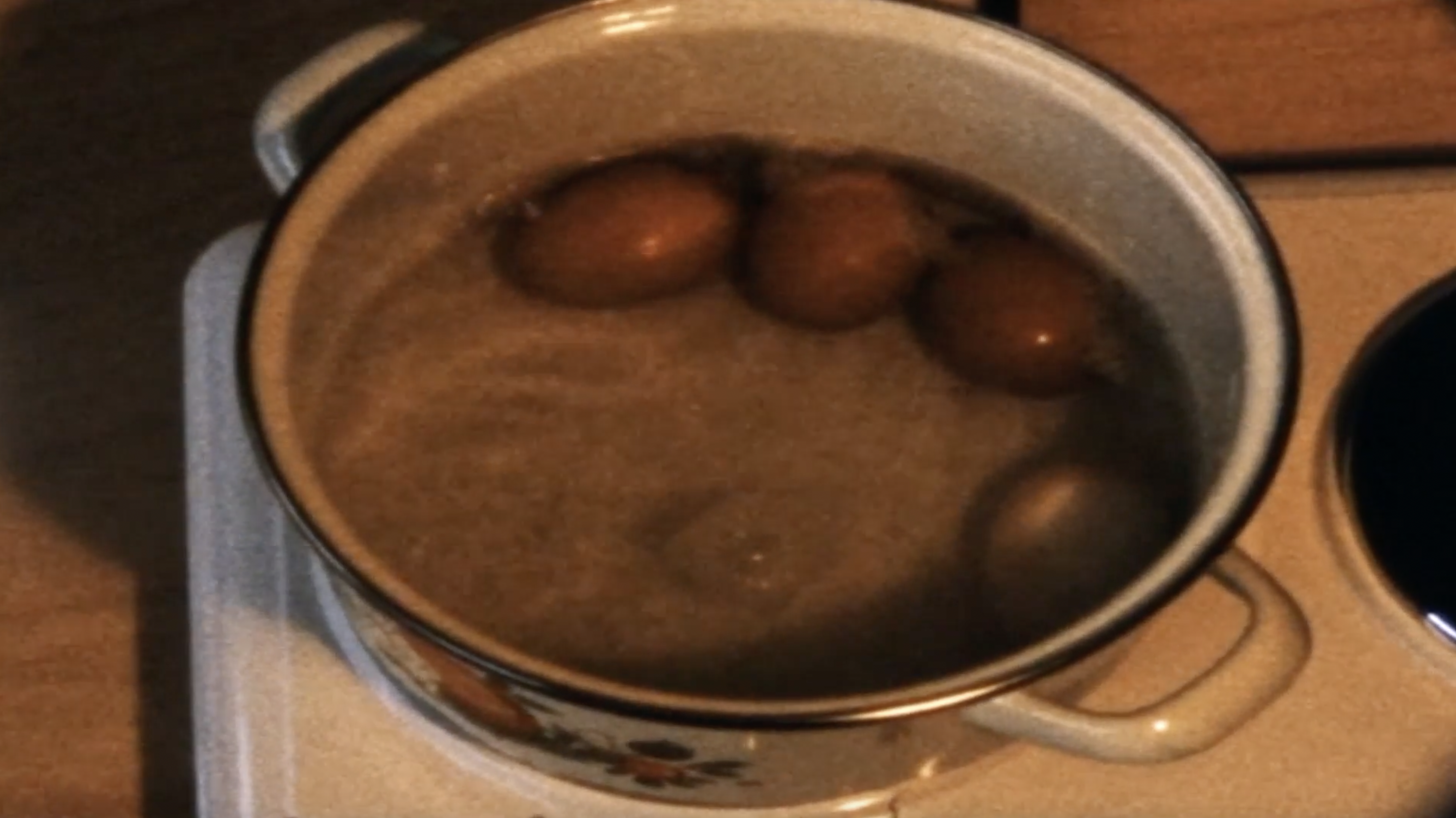
For his solo show, Egg, at the CEC, from February 21 to April 27, 2013, Jonathan Monk has imagined Soft Boiled Eggs, an edition of a series of unique Super 8 films. The making of these films is based on the duration of a Super 8 film cartridge and on the time, it takes to cook an egg. An edition with copies produced every two and a half minutes, a mechanical possibility of making an edition. In a same pan, Monk adds an egg every two and a half minutes: in the first film, we see only one egg, in the second two eggs, etc., until ten eggs in the tenth film. If this statement might seem simple and old-fashioned, it probably suggests an innocent imitation of historical and more conceptual eggs or series of eggs; we think of Manzoni, Broodthaers, Kippenberger… and also underlines the idea of egg as an object, the perfect multiple. For Jonathan Monk, the idea appears unavoidable: …”I like boiled eggs and I couldn’t escape from them! – for me they represented the beginning of something… in this case the egg and not the chicken…”
The finalised edition consists of a Super 8 film roll, one DVD transfer and a certificate of authenticity signed by the artist. It is housed in a black box, carefully hand painted with ten coloured eggs. An Easter edition, if you like.
Johnathan Monk, Soft Boiled Eggs, Soft Boiled Egg 1/10 + Soft Boiled Eggs 9/10 + Soft Boiled Eggs 2/10 + Soft Boiled Eggs 8/10 + Soft Boiled Eggs 3/10 + Soft Boiled Eggs 7/10 + Soft Boiled Eggs 4/10 + Soft Boiled Egsg 6/10 + Soft Boiled Eggs 5/10 + Soft Boiled Eggs 10/10, 10 unique films, Super 8 and DVD, colours, duration of the films = cooking time of one egg (approx. 2 min. 45), of 2 eggs, of 3, 4, 5, 6, 7, 8, 9, 10 eggs, colors, 2023
Johnathan Monk Soft Boiled Eggs Soft Boiled Egg 1/10, …, Soft Boiled Eggs 10/10, 10 unique films, Super 8 and DVD, colours, duration of the films = cooking time of one egg (approx. 2 min. 45), of 2 eggs, of 3, 4, 5, 6, 7, 8, 9, 10 eggs, black cardboard box with a hand – painted pattern by Jonathan Monk on its cover, spray, colours, containing the Super 8 film and a DVD – transfer, as well as a certificate of authenticity signed by the artist, edition of 10, numbered from 1 to 10, dated, edition of the Centre d’édition contemporaine, Geneva, 2013.
Jonathan Monk was born in Leicester in 1969 and lives and works in Berlin. His most recent solo exhibitions were held in 2023 at Cristina Guerra, Lisbon, Galerie Dvir, Paris, König2 project space, Vienna; in 2022 at Casey Kaplan Gallery, New York, Massimo de Carlo, Paris, and Meyer Riegger, Karlsruhe. In 2023, he took part in several group shows, including Galerie Nicolai Wallner, Copenhagen, Mudac, Lausanne, Fondation Morra Greco, Naples; in 2022, Collection Boros, Berlin, MAH, Geneva, Design Museum Holon, Israel, and MAAT, Lisbon.
This project is sponsored by the Federal Office of Culture and the Republic and the Canton of Geneva.
Recent « Before publications » of Paul Bernard and Giulia Essyad
With Marie Angeletti, Paul Bernard, Laurence Bonvin, Harry Burke, Liz Craft, Guillaume Dénervaud, Anne Dressen/Nick Mauss, Giulia Essyad, David Hominal, Dorothy Iannone, Matthew Lutz-Kinoy, Paul Paillet, Mai-Thu Perret, Susan Te Kahurangi King, Paul Viaccoz, Niels Wehrspann
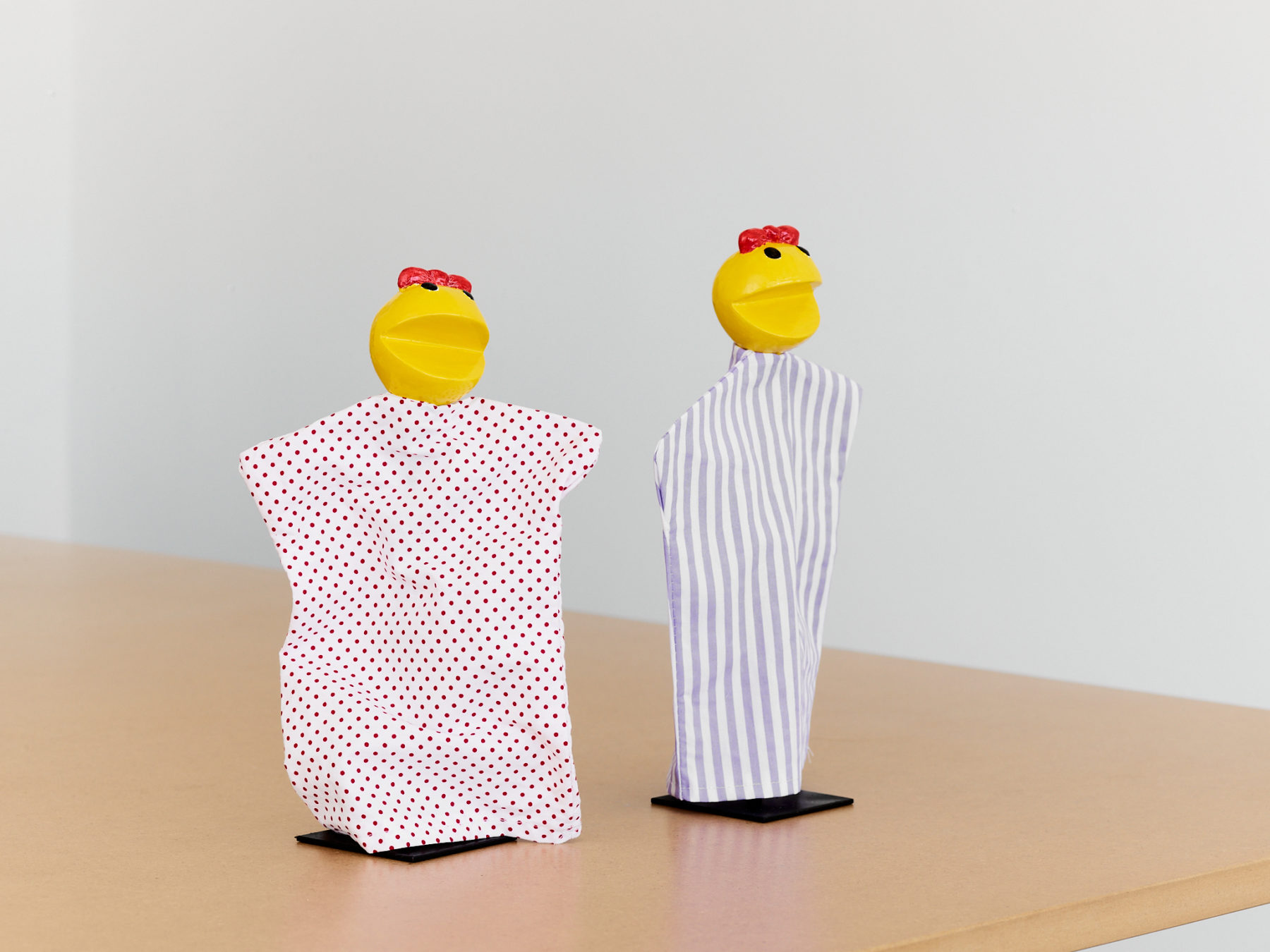
8 unique small-sized puppets, mixed media, polychrome porcelain heads, ca. 7 x 6 cm, colored dresses with different patterns, metal stands, ca. 30 x 19 cm, dated and signed on the dress, edition of the CEC, 2022
Monica Bonvicini, Harry Burke, Guillaume Dénervaud, Anne Dressen/Nick Mauss, Liz Craft, Keren Cytter, Mathis Gasser, Katie Holten, Dorothy Iannone, Jakob Kolding, Mads Ranch Kornum, Matthew Lutz-Kinoy, Victor Man, Paul Paillet, Josef Strau, Susan Te Kahurangi King, Oscar Tuazon, Jeffrey Vallance, Jean-Michel Wicker and Artists’ Voices
Valentin Carron, Marc Camille Chaimowicz, François Curlet, Keren Cytter, Philippe Decrauzat, Jason Dodge, Trisha Donnelly, Sylvie Fleury, Mathis Gasser, Thomas Hirschhorn, David Hominal, Aaron Flint Jamison, Raphaël Julliard, Tobias Kaspar, Jakob Kolding, Elke Krystufek, M/M (Paris), Jonathan Monk, Oscar Tuazon, Jeffrey Vallance, Oriol Vilanova, Jean-Michel Wicker, Heimo Zobernig
From March 23 till May 5, 2018 Opening Thursday March 22 from 6 PM to 9 PM
Keren Cytter, The Brutal Turtle, Book, offset, colours, 40 pages, 15 x 15 cm, an edition of 500, text in English. Coedition Pork Salad Press, Copenhagen and the Centre d’édition contemporaine, Geneva, 2018.
Keren Cytter, The Furious Hamster, Book, offset, colours, 56 pages, 15 x 15 cm, an edition of 500, text in English. Coedition Pork Salad Press, Copenhagen and the Centre d’édition contemporaine, Geneva, 2018.
Gerard Byrne, For example ; a sketch of Five Elevations, 1971-72, video, 9′ 37”, loop, mute, 2011
For his exhibition at the Centre d’édition contemporaine in 2011 (05.04 – 07.16.2011), Gerard Byrne has presented a film referring to a 1971-72 piece by Richard Serra he had had access to in the parc of a private collection near London: Five Elevations. This film follows a series of researches on abstraction and minimalism, and among others a previous film installation, A thing is a hole in a thing it is not (videos, 2010). It has been produced and presented first at the Van Abbemuseum, Eindhoven, then at The Renaissance Society, Chicago, at Lismore Castle Arts, County Waterford, Ireland, and at the 2010 Glasgow International Festival of Visual Art. This movieis made up of several short films showing works from the collection of the Van Abbemuseum, which somehow represent the quintessence of American minimalism: with paintings and sculptures by Carl Andre, Donald Judd, Dan Flavin, Robert Morris or Frank Stella. Reinstalled in the Eindhoven halls by Gerard Byrne, the works replay their presence in the museum. The camera records the works as well as the context: museum workers, photographs, cleaners, attendants and visitors. The shots result from large scanning or a back-and-forth between the surrounding space, the apparently insignificant details and the art works themselves, objectified as well. The shift in point of view operated by Gerard Byrne is recontextualized in the field of minimalism by Penelope Curtis in her essay A local address, in Tuxedo Junction (1960), about A thing is a hole in a thing it is not:
“This means that we are left with the possibility of thinking of Minimalism’s project as both romantic and classical; as a work of the imagination as well as of manufacturing; an idea as well as an object ; a dream as well as a result. It is also made clear, however, that Minimalism is not just about us, and our experience, but also about how other experiences are mediated for us, whether in text, voice or imagery.“1 Besides, the epigraph introducing the catalogue reads: “Assembled and edited by Gerard Byrne upon the achievements of the Minimalists and their critics.”2
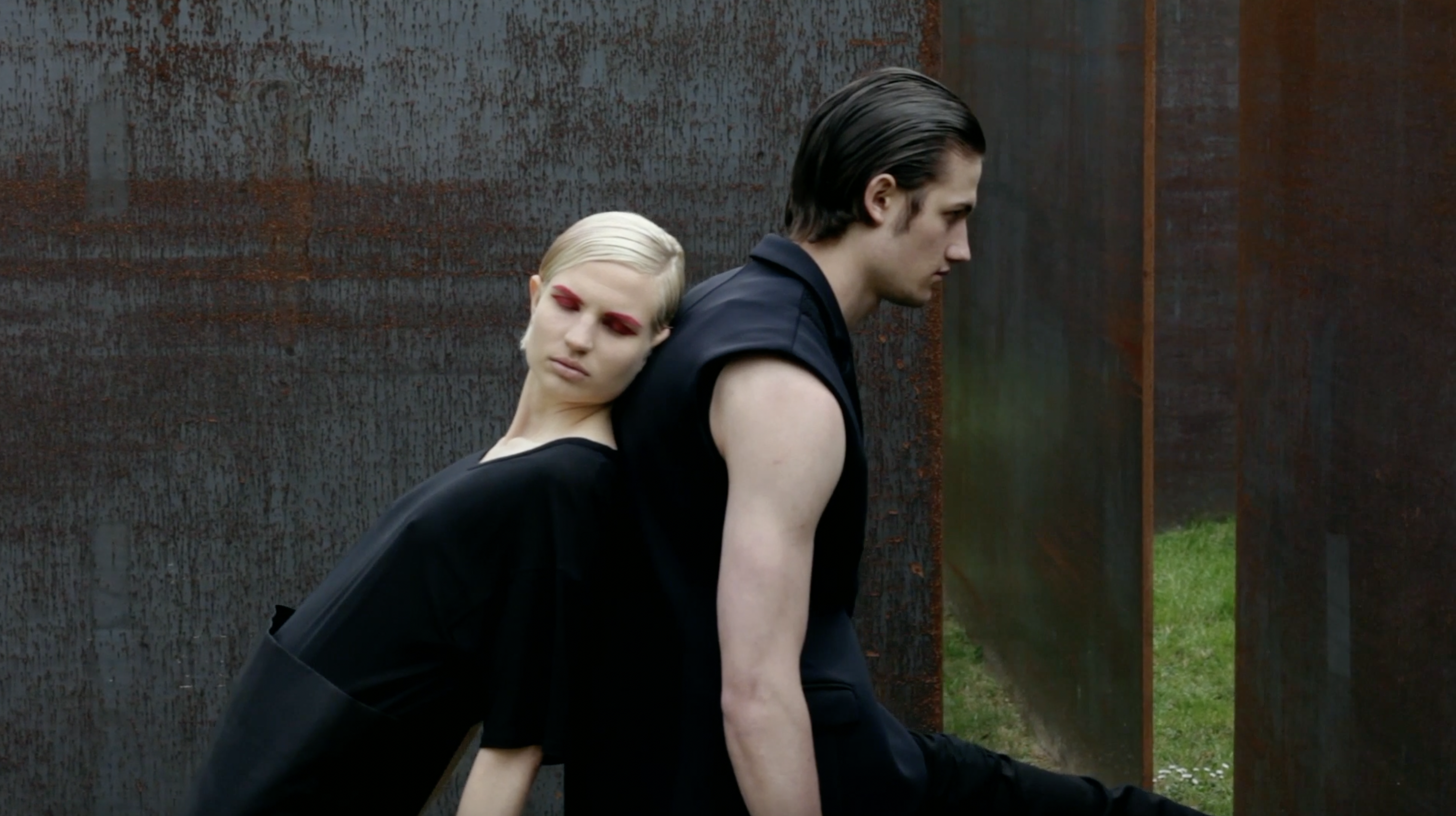
In For example; a sketch of Five Elevations, 1971-72, the camera moves around Five Elevations. Through shots using a variety of standards of cinematic grammar, creating a subjective image of this complex sculpture. In the background, and without being the subject of the movie, the camera records simultaneously and partly a fashion shoot taken place here by coincidence. Despite this double setting, the work of Richard Serra remains the principal character of this fiction, although the confrontation with the fashion shoot transforms Five Elevations in a kind of “Stonehenge“, provoking a back-clash between these two temporal dimensions: eternity vs the ephemeral.
As in his previous works, Gerard Byrne puts the question of the historical or the artistic transmission of a well-known reality, media-covered, phenomenological, or more: iconic. He puts this reality to the proof of its recording or re-recording (film, photography), of its diffusion and its reception:
“The idea was to construct for each work a kind of self-awareness of being viewed. I am interested in how the camera tries to construct and elaborate those viewpoints in a filmic sense. I recall Beckett’s Film quoting our fellow Irishman Bishop Berkeley – “To be is to be perceived.”
Gerard Byrne, For example ; a sketch of Five Elevations, 1971-72, HD video, loop, color, mute, multimedia player (full HD), 20 copies, 2 A.P. and 2 H.C., numbered, dated et signed. Edition of the Centre d’édition contemporaine, Geneva, 2011
Gerard Byrne’s works have been exhibited at Centraal Museum Utrech (2020), Sessession, Vienna (2019), Moderna Museet, Stockholm (2017), Kunstmuseum St. Gallen (2015), FRAC Pays de Loire, Nantes (2014), Baltimore Museum of Art (2013), Bonniers Konsthall, Stockholm (2013), Whitechapel Gallery, London (2013), Bonniers Konsthall, Stockholm (2013). Gall (2015), FRAC des Pays de la Loire, Nantes (2014), Baltimore Museum of Art (2013), Bonniers Konsthall, Stockholm (2013), Whitechapel Art Gallery, London (2013), Renaissance Society, Chicago (2011), Lisson Gallery, London and New York (2017, 2013, 2009 and 2007). He has also exhibited his works at the Kunstverein, Düsseldorf (2007) and for the Irish Pavilion at the 52nd Venice Biennale (2007). He has taken part in several group shows at Tate Britain, London (2006, 2010 and 2014), MUDAM, Luxembourg (2010), Kunstmuseum Basel, Basel (2010), Malmö Konsthall (2010) and Henry Moore Institute, Leeds (2010), as well as the Turin, Gwangju and Sydney Biennales (2008) and the Lyon Biennale (2007). He took part in the ILLUMInazioni exhibition for the 54th Venice Biennale (2011), Documenta 13, Kassel (2012), The Art of Memory, Bonniers Konsthall, Stockholm (2012), Salon der Angst, Kunsthalle, Vienna (2012) and Trapping Lions in the Scottish Highlands, Aspen Art Museum (2912), at Curiosity, De Appel, Amsterdam (2012), The Persistence of Objects, Lismore Castle, for Out of Body, Out of Time, Out of Place, Skulptur Projekte 2017, Münster (2017) and at the Busan Biennale (2020).
1 Penelope Curtis, “A local address”, in Gerard Byrne, Tuxedo Junction, 1960, Lismore Castle Arts, Lismore, Co Waterford, Ireland, 2010 2 Gerard Byrne, Tuxedo Junction, 1960, Lismore Castle Arts, Lismore, Co Waterford, Irelande, 2010, flyleaf
This project is sponsored by the Federal Office of Culture and the Republic and the Canton of Geneva.